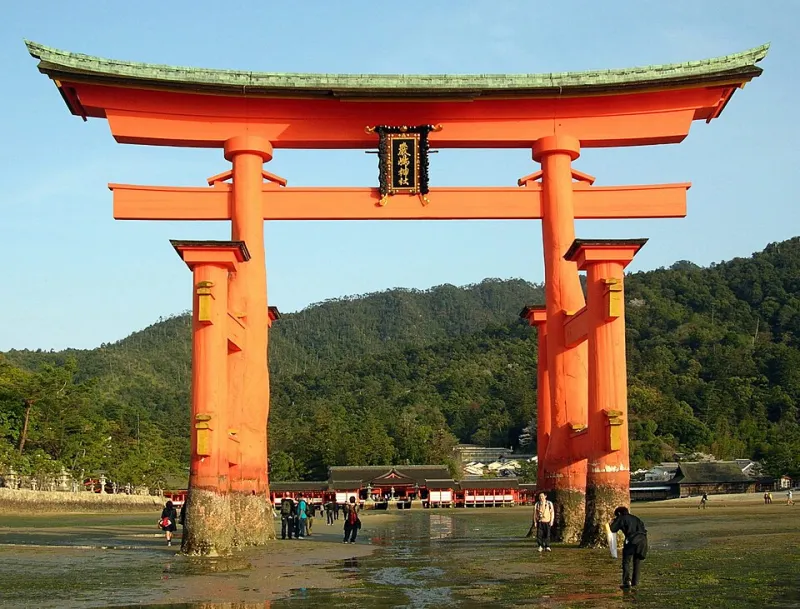
From Curiosity to Calling: Why American Travelers Are Flocking to Japan's Ancient Shinto Shrines
Photo: Frank H. Nowell, Public domain, via Wikimedia Commons
A quiet but unmistakable shift is reshaping American travel to Japan. Increasingly, visitors from the United States are venturing beyond Tokyo's neon corridors and Kyoto's famous temples to seek something far more personal: a genuine spiritual encounter at Japan's thousands of Shinto shrines. What is drawing modern Western travelers to these ancient sacred spaces, and what do they find when they arrive?
A New Kind of Travel Motivation
For much of the twentieth century, Western tourism to Japan centered on cultural spectacle — the flash of geisha districts, the grandeur of castle ruins, the bustle of Tsukiji Market. Today, however, travel industry data and anecdotal evidence alike suggest a meaningful reorientation. According to the Japan National Tourism Organization, cultural and spiritual site visits have grown steadily among North American tourists over the past decade, with Shinto shrines emerging as a top-tier destination category rather than a secondary footnote on the itinerary.
This trend does not exist in isolation. Across the United States, interest in mindfulness, intentional living, and non-Western spiritual practices has surged. From meditation studios in Portland to sound bath retreats in Sedona, Americans have demonstrated a sustained appetite for practices that offer stillness, reflection, and connection to something larger than the self. Shinto shrines, with their emphasis on purification, gratitude, and harmony with nature, speak directly to these contemporary desires — yet they do so through a framework that is thousands of years old.
What Visitors Are Actually Experiencing
Speak with American travelers who have visited major shrines such as Fushimi Inari Taisha in Kyoto or Meiji Jingu in Tokyo, and a consistent theme emerges: surprise at how felt the experience is, even for those with no prior knowledge of Shinto theology.
Sarah Olmstead, a marketing professional from Denver who visited Japan in the spring of 2023, described her time at Ise Jingu — Japan's most sacred shrine complex — as transformative in ways she had not anticipated. "I wasn't expecting to feel anything particularly spiritual," she said. "But walking the gravel path through those ancient cedar trees, hearing the silence, participating in the hand-washing ritual at the temizuya — something genuinely shifted in me. I felt like I was being asked to slow down and pay attention."
That experience of being asked to slow down is, in many respects, precisely what Shinto purification rituals — collectively known as misogi and harae — are designed to produce. The act of rinsing one's hands and mouth at the purification fountain before approaching the main shrine hall is not merely ceremonial hygiene. It is a symbolic shedding of the accumulated noise and impurity of daily life, a threshold ritual that prepares the visitor for genuine presence.
Shrine Priests Respond to International Interest
Shrine priests, known as kannagi or shinshoku, have noted the steady increase in international visitors with a mixture of welcome and thoughtful caution. The challenge, several have observed, lies in making the experience accessible without reducing it to performance.
The head priest of a prominent shrine in Nara Prefecture, speaking through an interpreter, expressed a sentiment shared by many of his colleagues: "We are genuinely glad when visitors from other countries come with open hearts. Shinto is not a missionary religion — we do not seek to convert anyone. But the kami [divine spirits] are present for everyone who approaches with sincerity and respect. That is the only requirement."
Several major shrines have responded to international interest by providing multilingual pamphlets, English-language signage explaining proper etiquette, and in some cases, guided tours led by English-speaking volunteers. Meiji Jingu in Tokyo, one of the most visited shrines in the country, has made particular efforts to welcome foreign guests while preserving the dignity and solemnity of its rituals.
The Wellness Connection
It would be reductive to frame the American interest in shrine visits purely through the lens of the wellness industry, but the connection is real and worth examining. The same generation of Americans that has embraced yoga, forest bathing, and digital detox retreats is finding in Shinto shrine culture a practice that integrates all of these impulses coherently.
Shinto's foundational concept of satoyama — the sacred relationship between human communities and the natural landscapes they inhabit — resonates powerfully with contemporary environmental consciousness. Many shrines are situated within ancient forests, beside rivers, or on mountaintops, and the natural setting is understood not as backdrop but as the very body of the divine. For American visitors accustomed to separating "nature trips" from "cultural trips," this integration can be genuinely revelatory.
Shrines Worth Prioritizing for First-Time Visitors
For American travelers planning their first shrine-focused itinerary, a few sites stand out as particularly meaningful entry points.
Fushimi Inari Taisha (Kyoto) is perhaps the most visually iconic, with its seemingly endless corridor of vermillion torii gates ascending Mount Inari. Beyond the famous photographs, the full hike to the summit offers genuine solitude and a sense of sacred ascent that many visitors find unexpectedly moving.
Meiji Jingu (Tokyo) offers an accessible introduction to major shrine culture within one of the world's busiest cities. The forested approach, crafted from trees donated by citizens across Japan, creates an atmosphere of remarkable tranquility just minutes from Harajuku station.
Ise Jingu (Mie Prefecture) is considered the spiritual heartland of Shinto and consists of two main shrine complexes connected by a traditional pilgrimage route. Its inner shrine, dedicated to the sun goddess Amaterasu, is the most sacred site in the Shinto tradition. The experience demands more time and intention than a casual day trip, but visitors consistently describe it as among the most profound experiences of their travels.
Izumo Taisha (Shimane Prefecture) is dedicated to Okuninushi no Mikoto, the deity of relationships and good fortune, and draws visitors seeking blessings in matters of love, friendship, and human connection — themes that translate effortlessly across cultural boundaries.
Approaching the Sacred with Respect
For American visitors, perhaps the most important preparation is attitudinal rather than logistical. Shinto shrines are not museums or theme parks. They are living places of worship, active today as they were centuries ago. The etiquette of bowing at the torii gate, of walking to one side of the central path (reserved for the kami), of approaching the offering box with a genuine sense of gratitude — these are not performances for photographs but acts of genuine participation in a spiritual tradition.
The growing number of Americans who arrive at Japan's sacred shrines with this understanding are finding something that the modern world rarely offers: a place that has been tended for centuries with the explicit purpose of providing exactly what they are looking for.