Built on Broken Ground: The Sacred Geography of Japan's Shrines and What It Reveals About Collective Healing
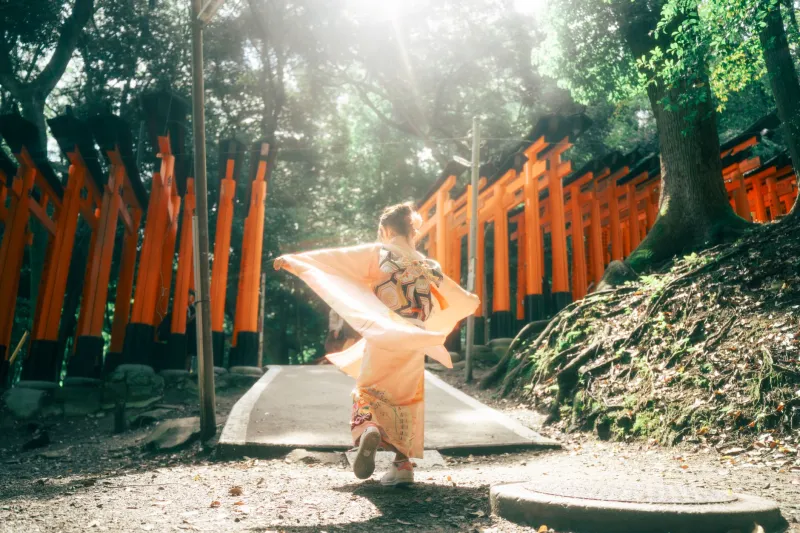
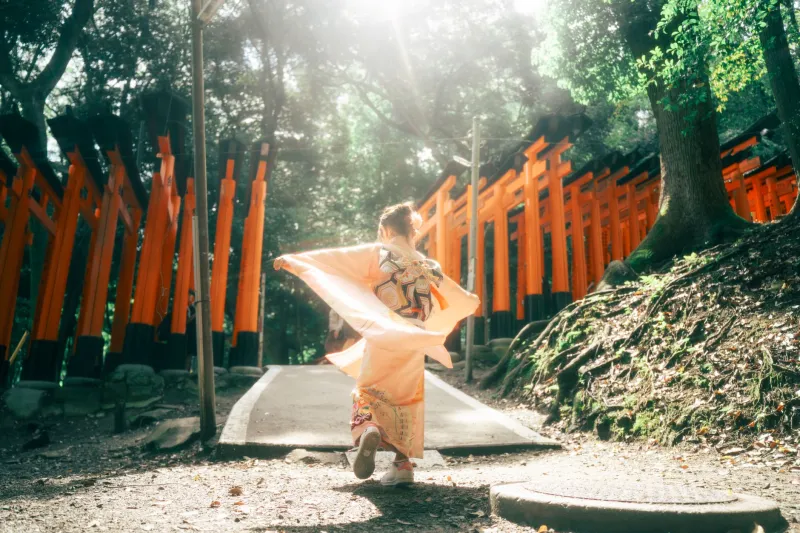
When American travelers plan a shrine visit in Japan, they tend to seek beauty: forested hillsides, vermillion torii gates reflected in still water, the photogenic serenity that has come to define the aesthetic of Japanese sacred space in the Western imagination. What many do not anticipate is discovering that some of the country's most spiritually potent sites were deliberately established on ground associated with disaster, violent death, and unresolved sorrow.
This is not incidental. It is doctrine.
The Concept of Tatari and the Logic of Enshrinement
To understand why Japan's oldest shrines are frequently located on sites that would strike most Westerners as inauspicious, one must first encounter the concept of tatari—a term that translates imperfectly as divine curse or spiritual retribution, but which carries connotations that neither English word fully captures.
In Shinto cosmology, powerful or traumatic deaths do not simply conclude. The spiritual energy generated by battlefield slaughter, natural catastrophe, or profound injustice persists in the landscape, manifesting as a force capable of causing ongoing harm to the living. The appropriate response to tatari is not avoidance. It is engagement—specifically, the establishment of a shrine to enshrine and honor the spirit responsible, transforming it from a source of harm into a source of protection.
This is the logic behind one of the most counterintuitive facts in Japanese religious geography: the sites most associated with danger, death, and misfortune are frequently the sites most urgently in need of sacred attention. The shrine does not bless the ground. The ground, in a sense, demands the shrine.
Battlefields Become Sanctuaries
Japan's history of internal conflict produced landscapes saturated with violent death, and Shinto's response to this history is inscribed in the placement of shrines across the country. Shrines dedicated to fallen warriors—not as a form of political glorification, but as genuine spiritual appeasement—appear throughout regions that witnessed significant medieval and early modern conflict.
The logic is consistent across centuries and contexts: warriors who died in battle, particularly those who died on the losing side without proper burial or recognition, were understood to generate powerful tatari. Enshrining them—acknowledging their suffering, honoring their spiritual presence, and providing a location for ongoing propitiation—was the mechanism by which communities transformed dangerous spiritual residue into something that could be related to, rather than merely feared.
For American visitors familiar with secular war memorials—the Vietnam Veterans Memorial in Washington, D.C., for instance, with its reflective black granite and its insistence on the individual names of the dead—this practice raises genuinely interesting comparative questions. Both traditions are attempting to do something with the weight of violent collective death. The methods and the metaphysical assumptions differ enormously, but the underlying human need they address is recognizable across cultures.
Earthquake Sites and the Enshrinement of Natural Catastrophe
Japan's position on the Pacific Ring of Fire has made seismic disaster a recurring feature of its history, and the country's sacred geography reflects this reality with striking directness. Shrines established in the aftermath of major earthquakes are not uncommon, and their placement frequently corresponds to sites of particular destruction or significant loss of life.
The Namazu—a giant catfish in Japanese mythology whose movements were said to cause earthquakes—was itself the subject of shrine veneration, with dedicated shrines appearing particularly in the Edo period following devastating seismic events. The impulse was the same as with battlefield shrines: acknowledge the destructive power, give it a sacred address, and establish a relationship with it that might, over time, transform its character.
Modern Japan has continued this tradition in ways that occasionally surprise outside observers. In the aftermath of the 1995 Great Hanshin earthquake and the 2011 Tōhoku earthquake and tsunami, communities in affected regions engaged in shrine-related rituals and, in some cases, established new commemorative sacred spaces at sites of particular tragedy. The impulse to sacralize the site of catastrophe—rather than simply clearing it, rebuilding over it, or memorializing it in secular terms—remained culturally available in ways that have no precise American equivalent.
Onryō and the Shrines of Restless Spirits
Perhaps the most dramatically counterintuitive category of Japanese sacred sites is the shrine established specifically to appease onryō—spirits of individuals who died in circumstances so unjust, so violent, or so unresolved that their spiritual energy is understood to remain actively dangerous.
The most famous example is Sugawara no Michizane, a ninth-century scholar and statesman who was unjustly exiled through political machination and died in distant Kyushu in bitterness and deprivation. In the years following his death, a series of disasters—lightning strikes on the imperial palace, deaths among those who had persecuted him, catastrophic floods—were attributed to his onryō. The imperial court's response was to posthumously restore his rank, and ultimately to enshrine him at what became Kitano Tenmangu in Kyoto and Dazaifu Tenmangu in Fukuoka. Today, these shrines are among Japan's most visited, beloved as centers of academic blessing.
The transformation is complete and instructive: from dangerous, vengeful spirit to beloved patron deity of students and scholars, the journey required acknowledgment of the original injustice, formal spiritual recognition, and the establishment of an ongoing relationship of veneration. The wound was not covered over. It was addressed.
What American Grief Counselors Are Beginning to Notice
A small but growing number of American therapists and grief counselors who have encountered Japan's tradition of enshrining difficult sites have found the framework unexpectedly resonant with contemporary trauma theory. The practice of returning to a site of suffering—not to relive the trauma, but to formally acknowledge it and establish a new relationship with the location—has parallels in certain therapeutic approaches, including elements of somatic and place-based grief work.
The Shinto tradition does not pathologize the persistence of the dead in the landscape of the living. It treats that persistence as a given, and builds a cultural technology for managing it. For American practitioners working with communities that have experienced collective trauma—whether from natural disaster, mass violence, or historical injustice—this alternative framework offers, if not a direct model, at least an expansive reminder that secular memorial culture is not the only available response.
Visiting Difficult Sacred Ground
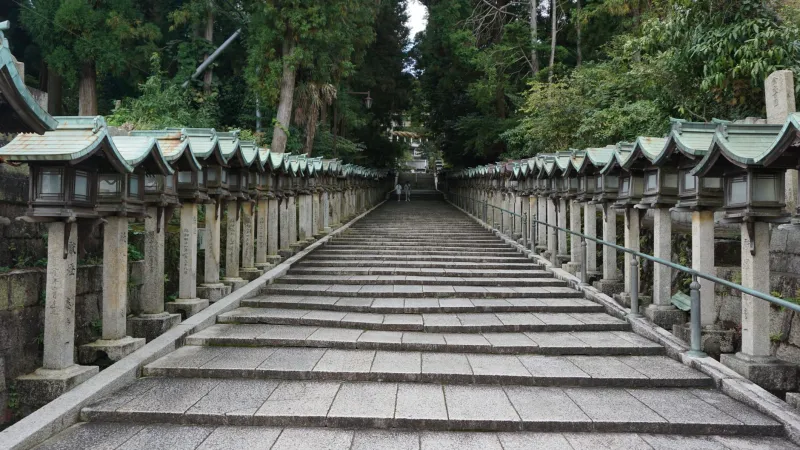
For American travelers who wish to engage with this dimension of Japanese shrine culture, a degree of preparation is valuable. Approaching a shrine established on a battlefield or disaster site with the same casual tourist energy appropriate to a scenic garden shrine is, at minimum, a missed opportunity, and at most a form of inadvertent disrespect.
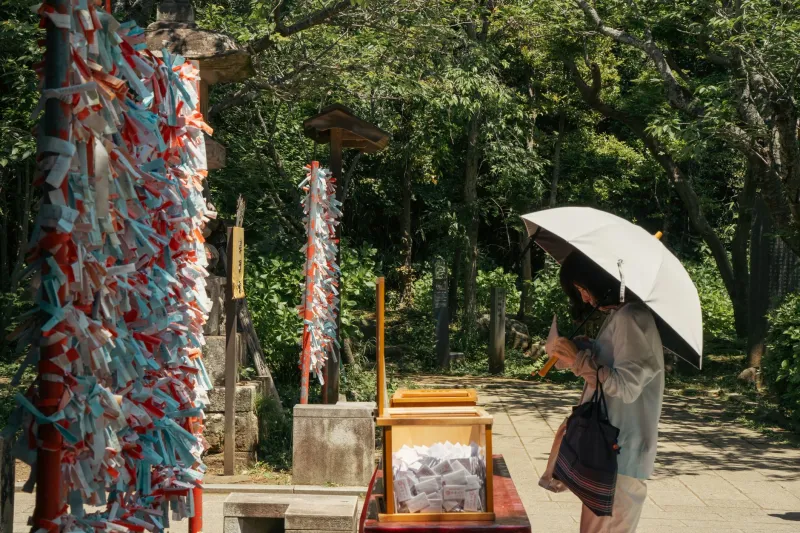
Arrive with some knowledge of the site's history. Observe the full purification protocol at the temizuya. Approach the main hall with the awareness that the kami enshrined there may represent something complex—a spirit that was once feared, a history that was once raw. The beauty of many such shrines is real and considerable. But the beauty is not incidental to the difficulty. In the Shinto view, it is the result of it.