Sitting With the Unknown: How Shrine Divination Practices Are Teaching Americans to Make Better Decisions
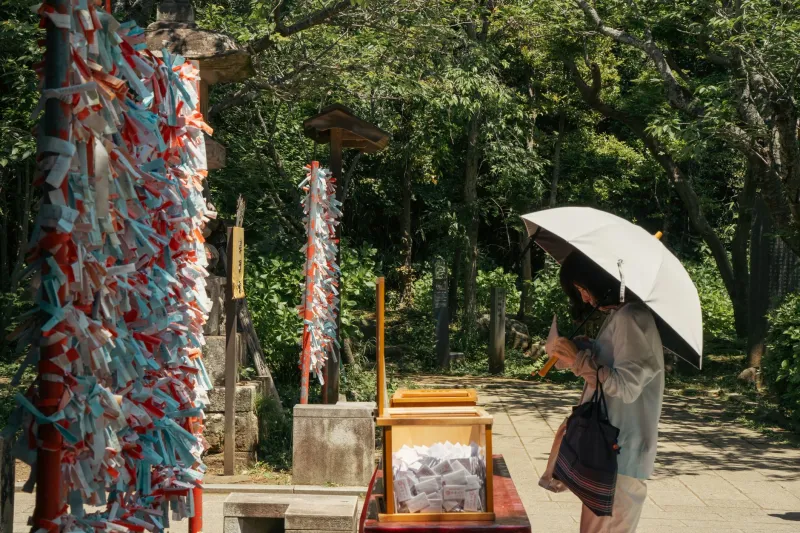
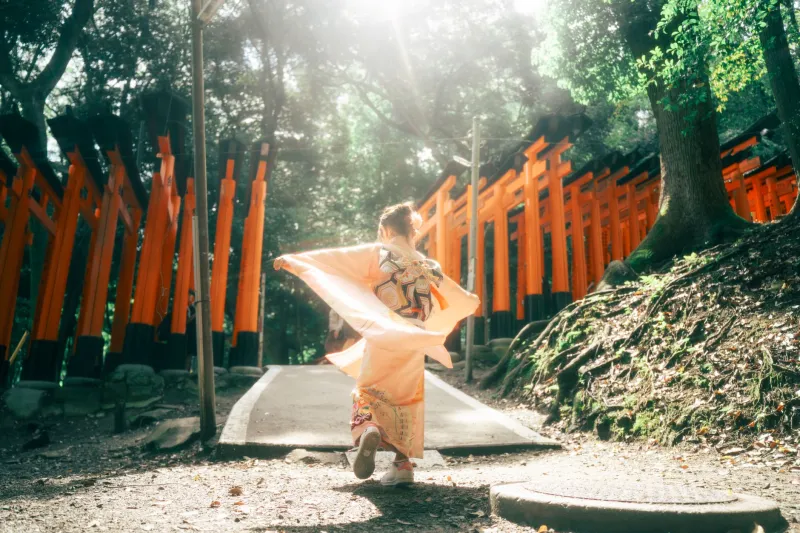
On a quiet Tuesday morning at Fushimi Inari Taisha in Kyoto, a middle-aged woman from Chicago stands before a wooden box mounted near the shrine's inner precinct. She shakes it gently until a thin bamboo stick emerges, numbered in brushed ink. A shrine attendant hands her a narrow strip of paper — her omikuji, a fortune drawn through one of Japan's oldest divination rituals. She reads it slowly, twice. Then she folds it, places it in her pocket, and sits down on a nearby stone bench for a very long time.
She is not looking for a shortcut. She is learning, perhaps for the first time, how to wait.
This is precisely the disposition that Shinto divination practices have cultivated for more than a millennium — and it is one that a growing number of American professionals are finding unexpectedly relevant to the decisions they face in their own lives.
What Divination Actually Means in the Shinto Context
In Western popular culture, divination often carries connotations of mysticism, superstition, or carnival fortune-telling. In the Shinto tradition, however, divination occupies a far more disciplined and deliberate role. The practice of seeking spiritual guidance — whether through omikuji, through consultation with a shrine priest, or through the presentation of formal petitions known as norito — is understood not as an attempt to bypass uncertainty but as a structured method of engaging with it.
Omikuji, the paper fortunes found at virtually every jinja across Japan, are among the most widely recognized expressions of this tradition. Visitors draw them after a moment of focused intention, and the resulting message — ranging from daikichi (great blessing) to kyo (misfortune) — is not meant to be received passively. The text accompanying each fortune typically addresses specific domains of life: health, travel, relationships, financial matters, and career. A skilled reader does not simply note the overall rating; they sit with each line, weighing how it speaks to their particular circumstances.
Priest-led divination practices go considerably further. In formal ritual settings, trained kannagi — individuals who serve as intermediaries between the human and divine realms — employ methods such as uranai (a broad term for sacred consultation) and, in certain historic shrines, forms of divination derived from ancient Chinese and indigenous Japanese traditions. These practices are performed with extraordinary care and formality, reflecting a core Shinto principle: that clarity cannot be forced. It must be received.
The American Decision Problem
The contrast with dominant American decision-making culture is difficult to ignore. In the United States, speed is frequently mistaken for competence. Business culture rewards decisiveness, and the pressure to project certainty — in boardrooms, in career negotiations, in personal relationships — can make the simple act of pausing feel like weakness.
Research from behavioral economists and organizational psychologists has documented the consequences of this orientation. Studies conducted at institutions including Harvard Business School and the University of Chicago have shown that decisions made under time pressure and social performance anxiety are significantly more likely to reflect cognitive bias than genuine preference. Americans, in particular, tend to conflate the speed of a decision with its quality.
This is precisely the gap that shrine-inspired practices appear to address.
What the Priest Knows That the Executive Doesn't
Shinto priests undergo years of formal training before they are entrusted with ritual divination responsibilities. Part of that preparation involves learning to sit comfortably within states of not-knowing — to resist the urge to resolve ambiguity prematurely and to recognize that certain questions can only be answered after a period of sustained, attentive waiting.
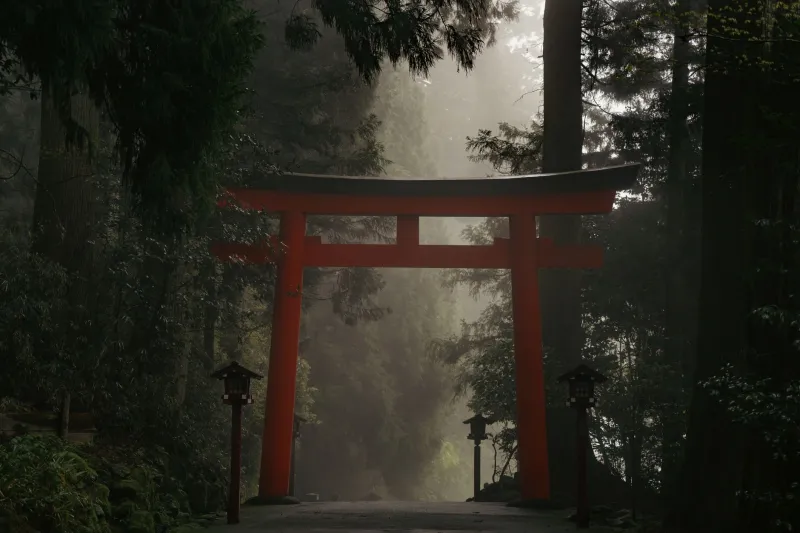
This orientation is embedded in the physical design of the shrine environment itself. The approach path, or sando, is deliberately long. The temizuya — the ritual purification basin — requires the visitor to stop and slow down before proceeding further. The innermost precincts of a jinja are, in many cases, entirely closed to public entry, a spatial reminder that some domains of knowledge are not immediately accessible and must be approached with humility.
American professionals who have spent time at Japanese shrines — either as cultural tourists or through more immersive experiences — frequently describe a shift in how they relate to unresolved questions. The enforced deceleration of the shrine environment, combined with the structured ritual of drawing an omikuji or observing a priest's consultation process, appears to create what psychologists might call a "productive pause" — a period in which competing impulses settle and something closer to genuine preference becomes audible.
Omamori and the Philosophy of Carried Intention
Alongside omikuji, the practice of carrying omamori — small fabric amulets purchased at shrine offices and dedicated to specific life domains — reflects another dimension of Shinto's approach to decision-making. An omamori for career success, for safe travel, or for clarity in relationships is not a magical object in the Western sense. It is, rather, a physical anchor for a stated intention.
Carrying such an amulet requires the bearer to have named what they are seeking. This act of naming — of articulating a specific need rather than holding a vague anxiety — is itself a form of cognitive discipline. Many Americans who have incorporated omamori into their daily routines report that the practice functions less as superstition and more as a portable mindfulness prompt: a small, tactile reminder of a commitment they have made to themselves.
Some executive coaches working with clients in New York and San Francisco have begun incorporating this principle into decision-support frameworks, asking clients to physically represent their stated intentions rather than keeping them abstract. The influence of shrine practice on these approaches is, in several cases, explicit.
Practical Implications for the American Visitor
For those planning a visit to Japan with an interest in experiencing these practices firsthand, a few considerations are worth noting. Omikuji are available at nearly every shrine and require no advance preparation; the ritual is accessible to non-Japanese speakers, and many major shrines now provide English translations of the fortune categories. Visitors are encouraged to receive the message with an open rather than a transactional mindset — the value lies less in the specific text than in the quality of attention brought to reading it.
For those interested in observing formal divination or consultation practices, research in advance is advisable. Some shrines offer scheduled sessions with priests for personal consultation, though these vary considerably by location and require respectful inquiry through official shrine channels. Arriving outside major festival periods and approaching shrine staff with patience and courtesy will generally be rewarded with genuine engagement.
Above all, the disposition that shrine divination cultivates — a willingness to ask without demanding an immediate answer — is one that can be practiced long before the plane lands in Japan.
A Different Relationship With Uncertainty
What Shinto divination ultimately offers is not a technique for making faster or more confident decisions. It offers something rarer and more difficult: a model for developing a different relationship with uncertainty itself. In the Shinto framework, not-knowing is not a failure state to be escaped. It is a legitimate phase of engagement with a serious question — one that deserves the same careful attention as the answer that eventually emerges.
For Americans accustomed to treating indecision as a personal defect, this reframing can be genuinely transformative. The shrine does not promise resolution. It offers, instead, a structured space in which resolution can arrive on its own terms.
That, perhaps, is the oldest and most durable wisdom these sacred grounds have to offer.