Ancient Calm in a Modern Crisis: How Japan's Shinto Shrines Are Offering Real Relief to Burned-Out Americans
The American professional's relationship with rest is, to put it gently, complicated. Vacation days go unused. Weekends blur into inbox management. The concept of genuine stillness has become, for many, more aspiration than reality. Against this backdrop, a quietly growing number of US travelers are arriving at Japan's Shinto shrines not merely as curious sightseers, but as individuals in search of something their domestic lives have been unable to provide: a space where the nervous system is genuinely permitted to exhale.
What they are finding, often to their considerable surprise, is that these sacred grounds—some of them thousands of years old—appear to be extraordinarily well-suited to that purpose.
What the Shrine Environment Actually Does to the Body
To understand why shrines exert such a pronounced calming effect, it helps to consider what distinguishes them from ordinary public spaces. Most urban environments that Americans inhabit daily are characterized by acoustic complexity, visual fragmentation, and a near-total absence of natural elements. Shrines, by deliberate design, invert almost every one of those conditions.
The approach path, or sandō, typically passes beneath a canopy of towering cedar or cypress trees. Neurobiological research conducted over the past two decades has established that exposure to forest environments measurably reduces cortisol levels, lowers blood pressure, and decreases activity in the prefrontal cortex regions associated with rumination—the mental loop of worry that characterizes anxiety disorders. Japan's own practice of shinrin-yoku, or forest bathing, emerged in part from studies conducted at forested shrine precincts.
Beyond the trees, the deliberate use of running water at the temizuya—the ritual purification basin near the shrine entrance—introduces another layer of physiological effect. The sound of flowing water has been shown to activate the parasympathetic nervous system, the branch responsible for the body's rest-and-digest response, effectively counteracting the fight-or-flight state that chronic stress maintains. Visitors who perform the hand-washing ritual with genuine attention, rather than perfunctory haste, frequently report an almost immediate shift in their internal state.
Dr. Yuki Tanaka, a researcher affiliated with a Tokyo-based institute studying environmental psychology, describes the shrine as "an environment that has been optimized, over centuries of intuitive refinement, for the precise neurological conditions that modern medicine is now trying to recreate artificially."
The Spiritual Architecture of Relief
Shinto priests tend to frame the restorative quality of shrine spaces in terms that are theological rather than clinical, though the two interpretations are not necessarily in conflict. Within Shinto cosmology, the kami—the sacred forces or presences that inhabit the natural world—are understood to reside with particular concentration at shrine sites, many of which were chosen for their proximity to mountains, ancient trees, rivers, or other natural phenomena of unusual character.
Reverend Hiroshi Matsumoto, a senior priest at a forested shrine in Nagano Prefecture, has observed the phenomenon of foreign visitors arriving in evident distress and departing in a noticeably altered state for many years. "We do not prescribe anything," he notes carefully. "We simply maintain the space as it has always been maintained—with attention, with ritual, with respect for what is present here. The kami do the rest."
For American visitors who arrive without any prior relationship to Shinto theology, this framing can initially feel inaccessible. Priests and experienced shrine guides consistently advise, however, that doctrinal understanding is not a prerequisite for genuine benefit. The invitation, as Reverend Matsumoto describes it, is simply to be present—to walk slowly, to observe without commentary, to allow the environment to register rather than to analyze it.
How Americans Are Approaching Shrine Visits as Intentional Therapy
Among the travelers who have begun incorporating shrine visits into what they explicitly describe as mental health itineraries, certain patterns of approach have emerged as particularly effective.
Mara Hendricks, a healthcare administrator from Seattle who visited Kyoto and Nara following a period of severe professional burnout, describes her experience at a smaller, less-visited shrine in the hills above the city as a turning point. "I had been to the famous ones and they were beautiful, but they were crowded and I was performing being a tourist," she explains. "When I found a quieter shrine and just sat in the courtyard for an hour without taking a single photograph, something genuinely shifted. I cried, which I hadn't been able to do in months. I didn't even understand why at the time."
Her account reflects a recommendation that shrine priests and cultural guides offer with some consistency: that the therapeutic potential of shrine visits is significantly diminished by the touristic behaviors—rapid movement, constant documentation, group conversation—that most visitors default to. The shrine, as a designed environment, rewards stillness and sustained attention in ways that few Western public spaces do.
James Okafor, a management consultant from Chicago who has visited Japan three times specifically to spend extended time at shrine precincts, has developed what he describes as a personal protocol. He arrives at shrines early—before 8:00 a.m. when possible—performs the purification ritual with deliberate care, and then sits in the haiden, or offering hall, for a minimum of thirty minutes without agenda. "I tell people it's the most effective thing I've found for resetting my nervous system, and I've tried everything," he says. "Meditation apps, therapy, retreats. Nothing works as consistently as an early morning at a quiet shrine."
Practical Guidance for the Intentional Visitor
For American travelers interested in approaching shrine visits with therapeutic intention, several practical considerations are worth noting.
Timing matters considerably. The restorative quality of shrine environments is most accessible when visitor density is low. Early mornings—particularly on weekdays—offer the closest approximation to the contemplative atmosphere that makes these spaces genuinely effective. The period between 6:00 and 8:00 a.m. at most shrines is often occupied only by priests conducting morning rituals and a small number of local worshippers.
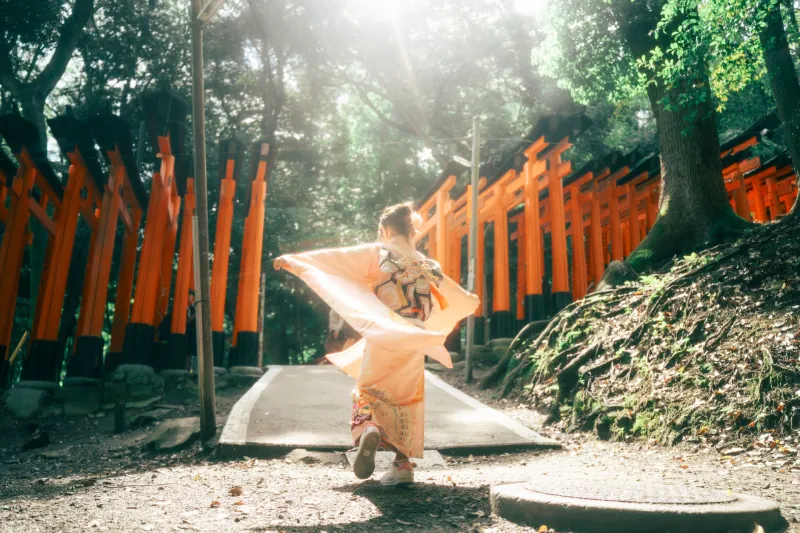
Smaller shrines frequently offer more. The grand imperial shrines of Ise, Nikko, and Fushimi Inari are culturally significant and worth visiting, but their crowds can work against the very stillness that makes shrine environments therapeutically potent. Neighborhood shrines, mountain shrines, and those accessible only by foot often preserve an atmosphere that larger sites struggle to maintain.
The purification ritual is not incidental. The temizu hand-washing ritual at the entrance basin functions, for many visitors, as a genuine threshold moment—a physical act that marks the transition from ordinary to sacred space. Performing it with attention rather than efficiency appears to meaningfully enhance the psychological effect of the visit that follows.
Silence is the appropriate register. Shrine precincts are not spaces designed for conversation. Visitors who observe silence—or at minimum, speak only softly and sparingly—report qualitatively different experiences from those who treat the grounds as a backdrop for social interaction.
A Refuge That Has Always Been There
What is perhaps most striking about the phenomenon of Americans seeking mental health relief at Japanese shrines is how unremarkable it would have seemed to previous generations of Japanese visitors. Shrines have functioned as refuges from the pressures of ordinary life—as spaces for grief, confusion, gratitude, and the need for stillness—for as long as they have existed. The contemporary American discovery of this function is, in a sense, simply a belated recognition of something that was never hidden.
The kami, Shinto tradition holds, are not indifferent to the condition of those who enter. Whatever one's relationship to that belief, the accumulated evidence—neurobiological, anecdotal, and architectural—suggests that Japan's sacred precincts offer something genuinely rare: an environment built, across centuries, for the specific purpose of restoring what daily life depletes.
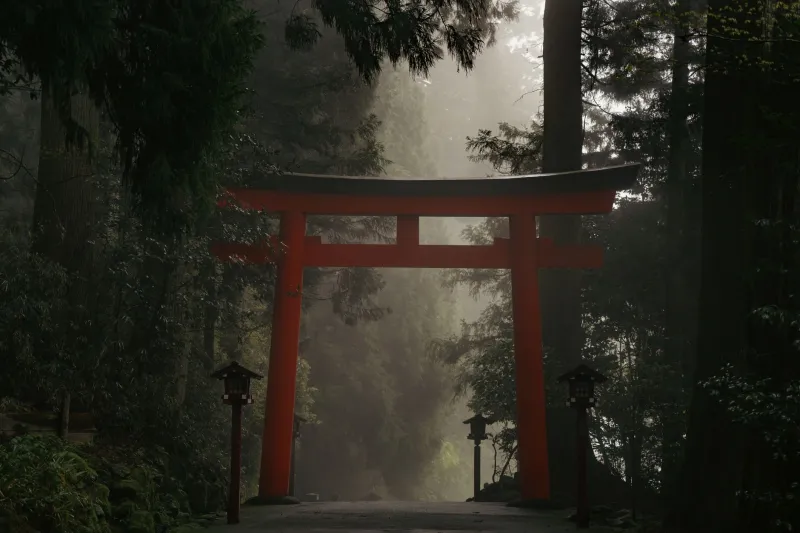
For the burned-out American professional standing at the base of a moss-covered stone torii, that may be precisely enough.