The Quiet Discipline of the Shrine Priest: What American Professionals Are Learning From Japan's Most Purposeful Workers
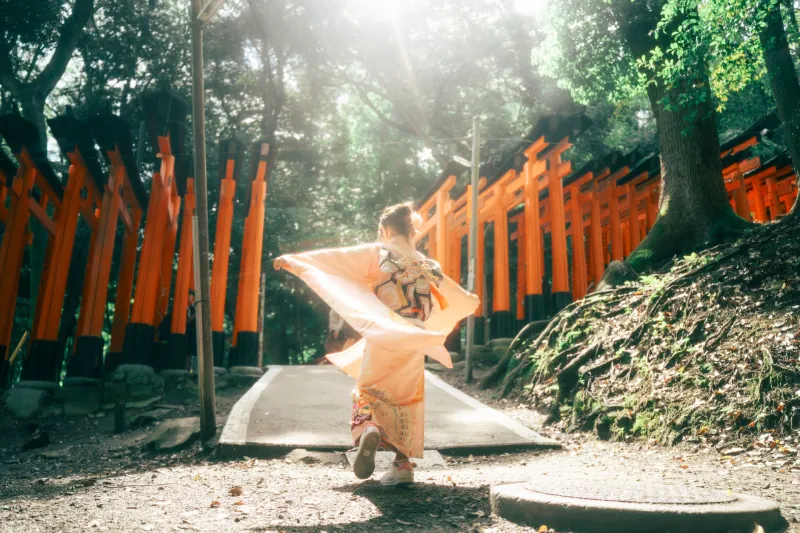
There is a moment, familiar to nearly every American who has visited a Shinto shrine in the early morning hours, when the noise of modern life becomes briefly, almost shockingly, absent. The gravel path is freshly raked. A priest in white robes moves through the courtyard with unhurried precision. There is no urgency. There is no performance. There is only the quiet execution of tasks that have been performed the same way, at the same hour, for generations.
For many US visitors, that moment lands differently depending on where they are in their professional lives. For those carrying the particular weight of chronic overwork — the kind that has become so normalized in American corporate culture that it barely registers as a problem anymore — the contrast can feel almost accusatory.
"I had been working eighty-hour weeks for three years," said one marketing director from Chicago who visited Fushimi Inari Taisha in Kyoto during what she described as a "reset trip" following a health scare. "Watching the priests go about their morning duties, I kept waiting for the rush. It never came. And I realized I couldn't actually remember the last time I had done anything without rushing."
Her experience is not unusual. Among cultural tourists who engage seriously with shrine life — attending early rituals, speaking with resident priests, or participating in guided programs at shrines that welcome foreign visitors — a pattern of reflection has emerged that goes well beyond spiritual curiosity.
The Architecture of a Priest's Day
To understand what American professionals are responding to, it helps to understand the actual structure of a Shinto priest's working life. A kannagi, or shrine practitioner, typically begins the day before most of their community has stirred. Morning purification rites, offerings of food and water to the enshrined kami, and the meticulous cleaning of sacred spaces are all completed before the public arrives. These are not optional warm-up tasks. They are the work itself.
Shinto theology holds that the manner in which something is done carries as much spiritual weight as the outcome. A ritual performed carelessly is not merely aesthetically inferior — it is considered incomplete. This principle, embedded in the concept of makoto (sincerity or true-heartedness), shapes how priests approach even the most repetitive aspects of their role.
Reverend Takeshi Yamamoto, a senior priest at a mid-sized shrine in Nara Prefecture who has spoken with foreign visitors through cultural exchange programs, describes the daily rhythm as a form of ongoing calibration. "Each task brings you back to the present," he explained through an interpreter. "You are not thinking about yesterday's problems or tomorrow's difficulties. You are sweeping this step, at this moment. That is the only work that exists."
For Americans conditioned to measure productivity in deliverables, deadlines, and quarterly outcomes, this framing is genuinely disorienting — and, for many, quietly revelatory.
Decision Fatigue and the Case for Ritual Structure
American professionals are increasingly familiar with the concept of decision fatigue — the cognitive deterioration that results from making too many choices across a given day. Studies from behavioral economics have documented how the quality of decisions declines as the volume of decisions increases, a phenomenon that affects everyone from hospital administrators to retail managers.
What shrine priests practice, largely without reference to neuroscience, functions as a structural antidote to this problem. By establishing a fixed sequence of morning rituals that require no deliberation — the same actions, in the same order, completed with the same care each day — priests effectively conserve cognitive and emotional resources for the judgments that genuinely require them.
Several American visitors who have reflected on this dynamic note that it reframes the value of routine in ways that productivity culture typically does not. In most US professional environments, routine is tolerated as a necessary background to "real" work. At a Shinto shrine, the routine is the real work. Its consistency is not a concession to efficiency; it is an expression of devotion.
"I came back from Japan and immediately started protecting my mornings," said a software engineer from Austin who visited Meiji Jingu during a work sabbatical. "Not to be more productive. To be more present. There's a difference, and I hadn't understood that before."
Purposeful Work Beyond the Productivity Metric
Perhaps the most significant shift that shrine visits prompt in American professionals is a reconsidering of what work is fundamentally for. American professional culture, particularly in tech, finance, and media, has long oriented itself around output as the primary measure of value. Hours are justified by deliverables. Effort is validated by results.
Shinto shrine work operates under a different logic. A priest who has completed the morning offerings with full attention and sincerity has done something complete, regardless of whether anyone witnessed it or whether it produced a measurable outcome. The kami, in Shinto belief, are present and responsive to genuine effort — not to results. This theological premise has practical implications for how priests understand their own labor.
Reverend Yamamoto described it this way: "We do not ask whether the ritual worked. We ask whether it was offered with true heart. That is the only question we can honestly answer."
For American professionals who have built careers around metrics they can control only partially — market performance, client satisfaction, team output — this reorientation toward process over outcome carries a particular kind of relief.
Applying Shrine Principles Without the Sacred Context
It is worth acknowledging a genuine tension in this conversation. Shinto shrine practice is not a wellness program. It is a living religious tradition with deep cultural and theological roots that extend far beyond its surface aesthetics. American professionals who visit shrines and return home inspired are engaging with something real, but they are also, necessarily, engaging with it incompletely.
Many priests who interact with foreign visitors are thoughtful about this distinction. They welcome genuine curiosity while gently resisting the reduction of sacred practice to self-help technique. The lessons that travel well — intentional routine, present-moment attention, sincerity over speed — are available to anyone willing to reflect on them. But they are most fully understood within the context of the tradition that generated them.
For American visitors who want to engage more deeply, several shrines in regions including Shimane and Mie prefectures offer structured programs for cultural learners that go beyond standard tourism. These experiences, which sometimes include participation in non-sacred aspects of shrine maintenance or attendance at open rituals, provide a more grounded encounter with shrine life.
What the Shrine Teaches That the Office Cannot
American burnout is, at its root, a crisis of meaning as much as a crisis of workload. Professionals do not simply exhaust themselves through overwork. They exhaust themselves through work that feels disconnected from purpose, from community, and from any standard of value beyond efficiency.
Shinto shrine priests have not solved this problem — they operate within a cultural and theological framework that the average American professional does not share. But they model something that many US workers have quietly stopped believing is possible: a working life in which the manner of doing things matters as much as the outcome, in which daily repetition is understood as depth rather than stagnation, and in which the purpose of labor extends beyond the measurable.
That is not a small thing to witness. And for an increasing number of Americans who make the journey to Japan's sacred grounds, it is the detail they carry home most carefully — more carefully, perhaps, than any souvenir.


