The Kami in the Ordinary: How Shinto Priests Are Helping Americans Discover the Sacred in Daily Life

A Philosophy That Begins at the Kitchen Table
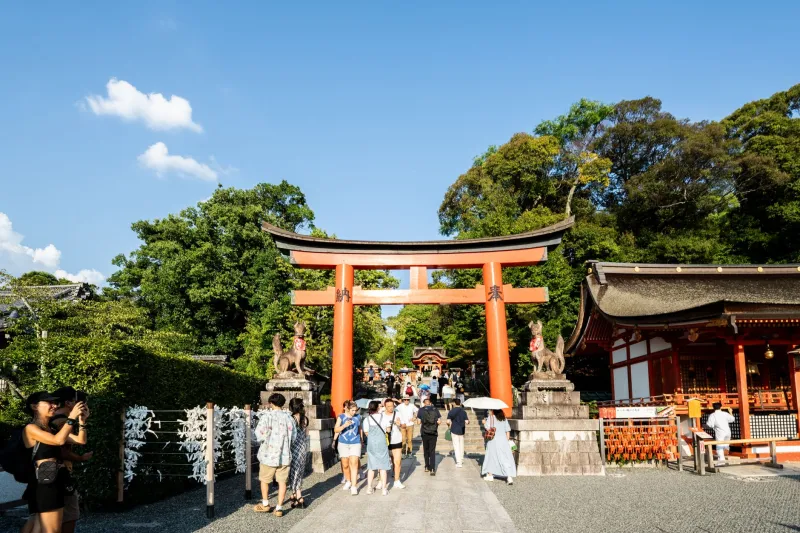
For most Americans, the word "shrine" conjures images of vermilion torii gates rising from misty forests, or grand stone lanterns lining an ancient approach path in Kyoto. The sacred, in the Western imagination, tends to exist elsewhere—in a church, a temple, a designated holy site. Shinto, Japan's indigenous spiritual tradition, offers a fundamentally different proposition: the sacred is already here, woven into the fabric of the ordinary world, waiting to be recognized.
This is the essence of kami—a concept that resists clean translation but is most commonly rendered in English as "spirit" or "divine essence." Kami is understood to inhabit natural phenomena, significant objects, and even particular qualities of experience. A gnarled old tree, a mountain stream, the particular quality of light on a winter afternoon—all are potential vessels of kami. And increasingly, Japanese Shinto priests are engaging with American spiritual seekers who have encountered this idea and found it quietly revolutionary.
"The most common misunderstanding," says one Shinto priest based in Nara who has participated in cultural exchange programs with American universities, "is that kami is something supernatural, something separate from ordinary reality. But kami is not above the world. It is in the world. The shrine is simply a place where that presence has been formally acknowledged."
What Animism Looks Like in Practice
Shinto's animistic worldview has deep roots in Japan's agricultural and ecological history. Before the formalization of shrine architecture and ritual practice, communities recognized kami in the specific features of their local landscape—a distinctive boulder, a spring that never ran dry, a tree that survived a lightning strike. These were not metaphors. They were understood as genuine sites of spiritual concentration.
Over centuries, this grassroots spiritual awareness became institutionalized into the shrine system that travelers encounter today. But priests are careful to note that the institution was always meant to point back toward the underlying reality, not replace it. The shrine is a reminder. The kami, however, is everywhere.
For American practitioners drawn to mindfulness, nature-based spirituality, or simply a more textured relationship with everyday experience, this framing holds considerable appeal. It does not require doctrinal conversion or the adoption of ritual practices wholesale. It asks, instead, for a quality of attention—a willingness to pause and consider whether the object in one's hand, the tree outside one's window, or the act of preparing a meal might carry a weight that purely utilitarian thinking tends to overlook.
"I started thinking about kami after visiting Fushimi Inari in Kyoto," says a mindfulness educator based in Portland, Oregon, who has incorporated Shinto concepts into her practice. "What struck me wasn't the grandeur of the shrine. It was the way the priests and visitors treated every part of the space—the stone, the water, the air—as if it mattered. That quality of regard is what I brought home."
The Discipline of Sacred Attention
Priests who have engaged with Western audiences are thoughtful about the risks of cultural misappropriation and conceptual dilution. The goal, most emphasize, is not to export Shinto as a brand or a wellness product, but to open a genuine conversation about how different cultures understand the relationship between human beings and the living world around them.
One recurring theme in these exchanges is the distinction between sentimentality and sacred attention. Appreciating a sunset is not, by itself, an encounter with kami. What Shinto practice cultivates is something more disciplined—a sustained, humble awareness that the world is populated with presences that deserve acknowledgment, and that human beings are participants in a vast relational web rather than observers standing outside it.
This distinction has practical implications. In shrine practice, it manifests in the careful treatment of ritual objects, the precise choreography of purification rites, and the meticulous maintenance of shrine grounds. Each of these activities is understood not as mere formality but as a form of ongoing relationship with kami. The American practitioners who find the most meaning in Shinto concepts tend to be those who grasp this relational quality—who understand that recognizing kami is not a passive experience but an active, attentive practice.
"We bow at the entrance to the shrine not because we are required to," explains a shrine priest who leads educational tours for international visitors. "We bow because we are acknowledging that we are entering a relationship. That same acknowledgment can happen anywhere. At your front door. Before a meal. When you pick up a tool you have used for many years."
Objects, Memory, and the Weight of Use
One of the most resonant aspects of Shinto animism for American audiences is the concept of tsukumogami—the idea that objects, particularly those that have been used and cared for over long periods, may develop their own spiritual presence. While this concept belongs to a broader folkloric tradition rather than formal shrine theology, it illuminates something that many people intuitively recognize: that certain objects feel different from others, that a grandmother's sewing kit or a grandfather's woodworking tools carry a quality that a brand-new equivalent does not.
This is not mere nostalgia, Shinto thought suggests. It is a recognition that objects accumulate relationship—that they become, in some meaningful sense, participants in the lives of those who use them. The respectful treatment of worn-out tools, the careful repair of objects rather than their casual replacement, and the practice of kuyo—memorial services held for objects that have served their purpose—all reflect this underlying philosophy.
For Americans living in a culture of disposability and rapid consumption, this aspect of Shinto thought often lands with particular force. It offers a spiritual vocabulary for something many people already feel but struggle to articulate: that the way we treat the objects in our lives reflects something about the way we treat the world.
Finding the Threshold Wherever You Stand
The torii gate that marks the entrance to a Shinto shrine serves as a threshold—a boundary between the ordinary world and a space of heightened spiritual awareness. What priests engaged in cross-cultural dialogue increasingly emphasize is that the threshold is, in essence, a practice of mind rather than a physical structure.
The shrine teaches this practice through architecture, ritual, and accumulated tradition. But the capacity it cultivates—the ability to recognize moments of genuine presence, to pause at the edge of the ordinary and acknowledge something larger—is one that human beings can develop in any landscape, any daily routine.
For American travelers who have walked through a torii gate and felt something shift, the invitation is to carry that quality of attention home. Not to build a replica shrine in the backyard, but to develop the discipline of sacred noticing—to ask, in the midst of an ordinary Tuesday, what here deserves acknowledgment, what here is alive with more than utility.
That question, Shinto suggests, is itself a beginning.