The Sacred Art of Refusal: How Shinto Priests Model the Boundaries American Professionals Desperately Need
In a culture where answering emails at midnight is considered dedication and skipping vacation is worn as a badge of honor, the idea of saying no—clearly, unapologetically, and without elaborate justification—can feel almost radical. Yet inside Japan's thousands of Shinto shrines, a very different philosophy has governed daily life for centuries. Shrine priests do not simply manage their time. They protect it, guided by protocols so embedded in ritual and tradition that refusal becomes not a personal failing but a spiritual obligation.
For American professionals who find themselves perpetually overextended, the practices of the Shinto priesthood offer something more than inspiration. They offer a coherent framework—one that has been tested across generations—for understanding why limits are not obstacles to purpose, but the very conditions that make it possible.
What the Shrine Teaches Before You Even Enter
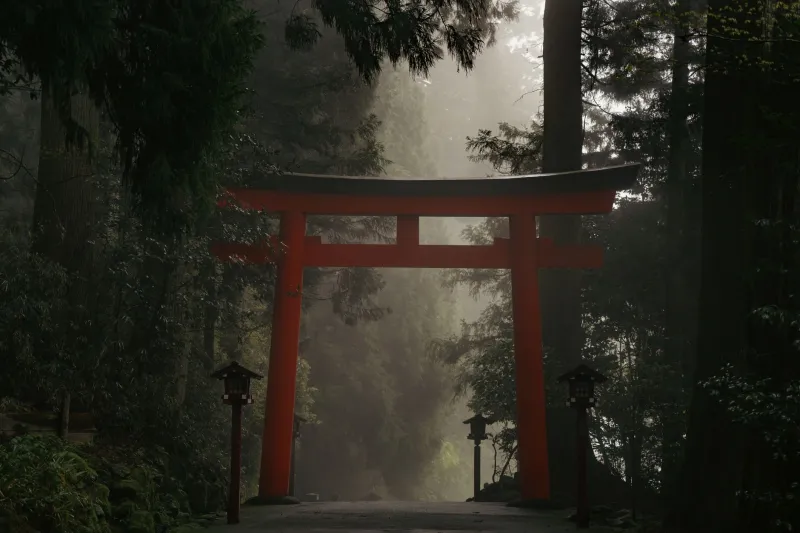
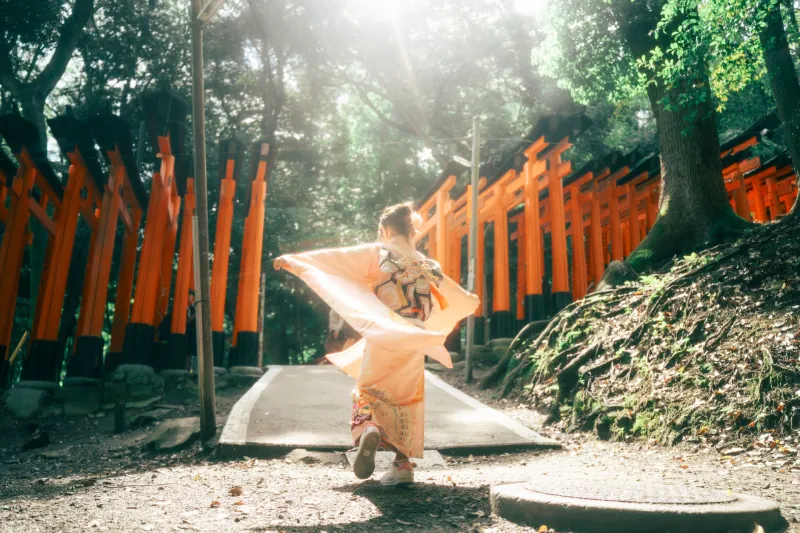
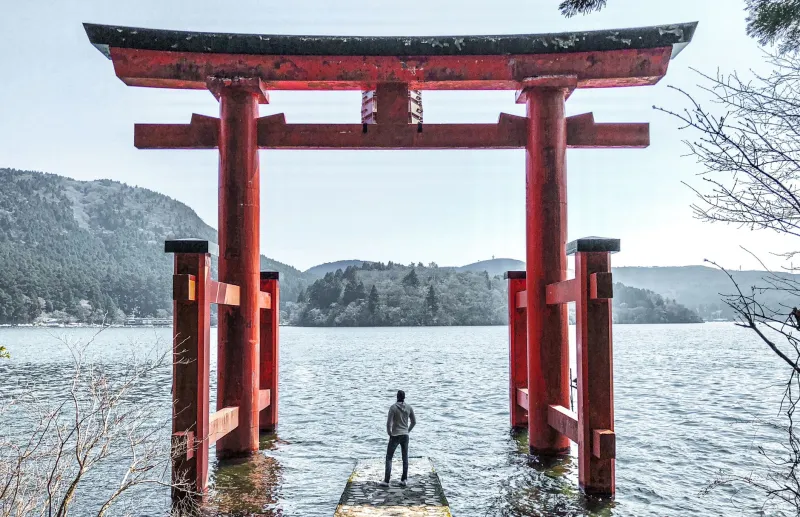
The architecture of a Shinto shrine communicates boundaries long before any human interaction takes place. The torii gate marks a threshold between the ordinary world and sacred ground. The sandō, or approach path, slows the visitor's pace deliberately. Purification fountains require a specific, unhurried sequence of actions before entry is permitted. None of this is incidental. Every physical element of the shrine encodes a message: not everything is permitted here, and not all times are the same.
For priests trained within this environment, the concept of sacred demarcation is not abstract. It is architectural, seasonal, and procedural. Certain areas of a shrine are permanently closed to the public. Certain rituals may only be performed at specific hours. Certain requests—however sincere—fall outside the boundaries of what a priest is spiritually authorized to accommodate. These are not bureaucratic inconveniences. They are expressions of the belief that the sacred must be actively protected in order to remain sacred.
American workplaces rarely offer anything comparable. Open-floor offices, always-accessible communication platforms, and the cultural expectation of perpetual availability have effectively dismantled the architectural and temporal boundaries that once separated work from rest. The result, as a growing body of research confirms, is chronic depletion rather than sustained productivity.
Seasonal Rhythms as a Form of Institutional Boundary
One of the most instructive aspects of shrine life is the degree to which it is governed by the calendar. Shinto is fundamentally a religion of seasons, and priests organize their professional and spiritual obligations around the annual cycle of matsuri, or festivals, along with quieter periods of preparation, reflection, and renewal. During certain seasons, a shrine may limit public ceremonies. During others, the priest's attention is directed entirely toward internal rites that have no public-facing component whatsoever.
This seasonal structuring is not merely logistical. It reflects a theological conviction that human energy, like the natural world, is cyclical rather than linear. Attempting to sustain peak engagement across every season is understood, within this framework, as a kind of spiritual error—a failure to honor the natural rhythm of effort and restoration.
For American professionals accustomed to quarterly performance cycles and year-round productivity demands, this model may initially seem impractical. But the underlying principle translates with surprising directness. Establishing professional seasons—periods of deep focus followed by deliberate deceleration—mirrors what many organizational psychologists now advocate under the language of ultradian rhythms, energy management, and sustainable performance. The Shinto priest arrived at these conclusions through theology. The modern workplace is arriving at them through burnout statistics.
The Discipline of the Intentional No
Perhaps the most counterintuitive aspect of shrine protocol, from an American perspective, is the way in which refusal is treated as a form of service rather than a failure of hospitality. Priests regularly decline requests that fall outside the appropriate scope of shrine activity—requests that are, in some cases, entirely well-intentioned but simply incompatible with the integrity of the sacred space.
This kind of refusal requires a particular quality of confidence that most American professionals are never trained to develop. In a professional culture that prizes agreeableness, availability, and the appearance of limitless capacity, saying no—even to requests that are genuinely unreasonable—can feel threatening to one's professional identity. The Shinto model suggests a reorientation: the ability to refuse is not a weakness to be overcome but a competency to be cultivated.
Importantly, the priest's refusal is not personal. It is institutional and spiritual. The priest is not declining because of preference or inconvenience. The priest is declining because the request conflicts with the requirements of the role and the integrity of the space. This distinction matters enormously. When American professionals frame their own limits in similarly principled terms—not "I don't want to" but "this falls outside the boundaries of what I can do with integrity"—the refusal becomes defensible in ways that personal preference rarely is.
Protecting Time as a Spiritual Practice
Shinto priests begin their days before most of the world is awake, performing private rituals that are not observed, not documented for social media, and not oriented toward any external audience. These morning practices are considered foundational—not supplementary—to everything that follows. The priest's capacity to serve the shrine community depends on the integrity of these private preparations.
The implication for American professionals is significant. Time that is protected from external demands is not wasted time. It is, in the Shinto framework, the source from which meaningful engagement with the world becomes possible. The American tendency to treat unscheduled time as a productivity failure directly inverts this logic.
Incorporating even modest protected periods into a professional routine—mornings before devices are checked, afternoons blocked from meetings, evenings genuinely disengaged from work communication—begins to approximate the structural logic of shrine time. The content need not be religious. The principle, however, is ancient and consistent: what is never protected will eventually be consumed.
A Different Definition of Professionalism
At its core, what the Shinto priesthood models is a definition of professionalism that American workplace culture has largely abandoned: the idea that doing one's role well requires the active defense of the conditions that make excellence possible. The priest does not apologize for the shrine's hours. The priest does not offer exceptions to purification protocols out of convenience. The priest does not treat the sacred calendar as negotiable.
This is not rigidity. It is integrity—the alignment of behavior with a coherent understanding of what the role demands and what it cannot sustain. American professionals who have spent years accommodating every request, attending every meeting, and remaining reachable at every hour may find in this model something they have been unable to articulate: a principled basis for the limits they have always sensed were necessary but never felt entitled to enforce.
The torii gate does not apologize for marking a threshold. It simply stands, clear and enduring, as a reminder that some spaces must be entered carefully—and that the care required is itself a form of respect.
For those willing to look, Japan's shrine culture offers not just a historical curiosity but a living practice. The discipline of sacred boundaries, refined across centuries of ritual life, may be precisely the model that America's most exhausted professionals have been waiting for someone, somewhere, to demonstrate.