Before the Gates Open: Inside the Private Rituals That Power Japan's Shinto Shrines
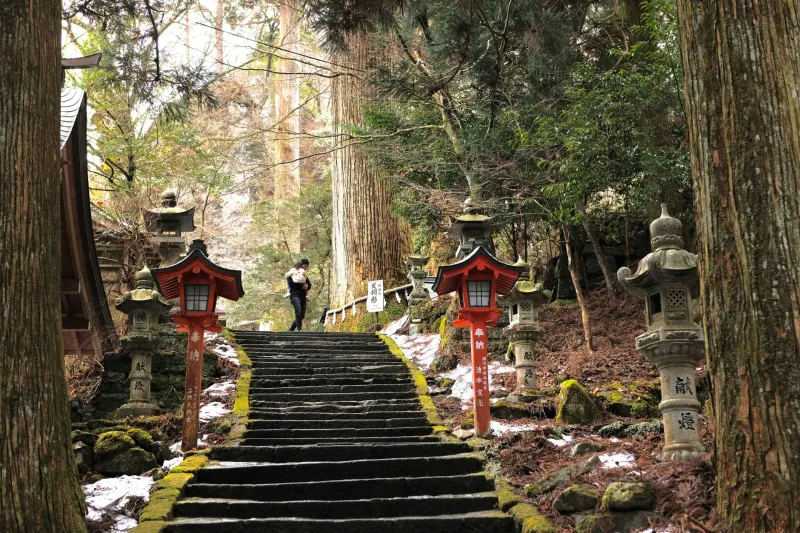
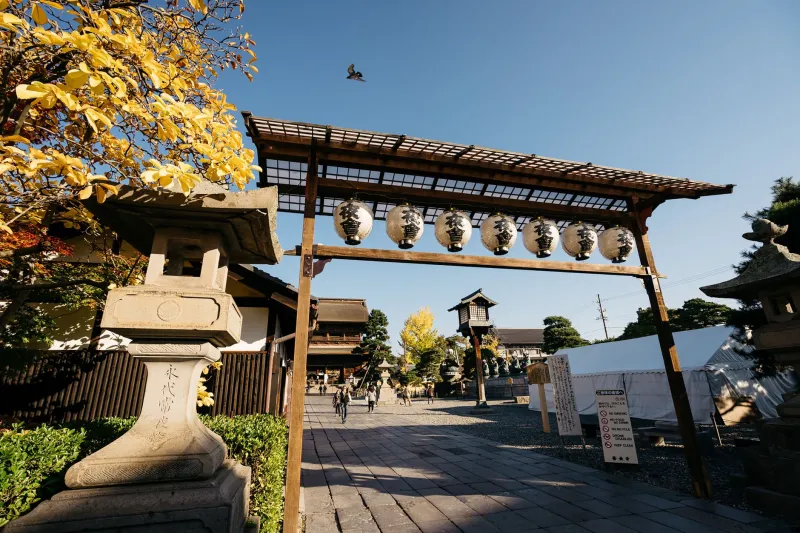
For the average American traveler arriving at a Japanese shrine mid-morning, the experience tends to follow a familiar sequence: the approach along a tree-lined path, the pause at the stone water basin, the soft clap of hands before a wooden offertory box. It is a meaningful encounter, carefully preserved for public participation. Yet what most visitors never realize is that the spiritual machinery animating that encounter was set in motion hours — sometimes days — before they arrived.
The ceremonies conducted out of public view are not ceremonial extras. They are, in the understanding of Shinto practice, the essential acts that maintain the living relationship between a shrine's enshrined deity, known as the kami, and the world around it. Understanding them transforms a shrine visit from a cultural photo opportunity into something far more layered.
The Day Begins Before Sunrise
At major shrines across Japan, the head priest — the gūji — and senior clergy begin their duties well before dawn. The first act is almost always personal purification. Before a priest may approach the inner sanctuary, he must undergo misogi, a ritual cleansing that may involve cold water ablutions, the recitation of purification prayers, or both. This is not symbolic hygiene. Within Shinto cosmology, spiritual pollution — called kegare — accumulates through ordinary living, and it must be actively removed before one can stand in proximity to the divine.
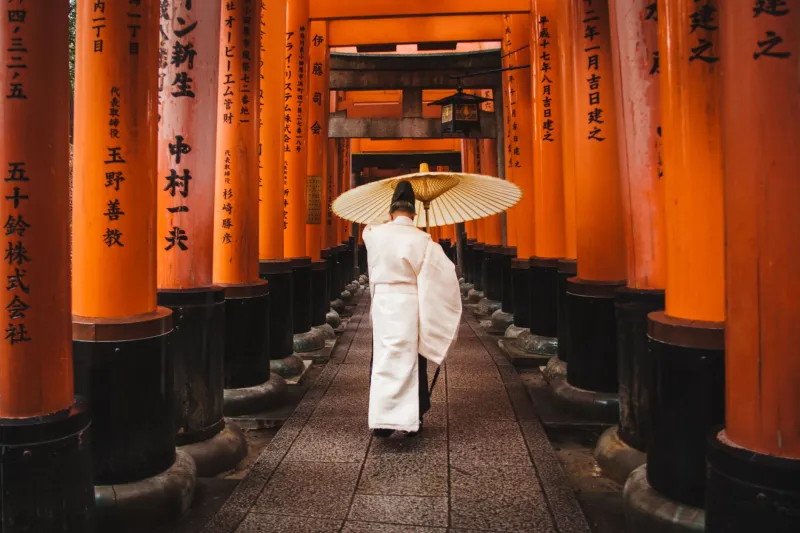
Once purified, the priest dons formal court-derived vestments, a layered ensemble whose colors and construction follow protocols established over a thousand years ago. The act of dressing is itself deliberate and unhurried. Each garment is put on in a prescribed sequence, and the entire process is understood as a transition — a crossing from the ordinary world into a state of ritual readiness.
Waking the Deity: The Morning Offering Ceremony
The centerpiece of the pre-dawn routine at most shrines is the Onitobe or morning offering ritual, sometimes referred to broadly under the umbrella of Nichi-nichi Saiten — daily ceremonies. The inner sanctuary is opened with specific prayers and gestures, and offerings of food and drink are formally presented before the kami's sacred object, known as the shintai. These offerings, called shinsen, typically include rice, salt, water, sake, seasonal vegetables, and fish — all arranged according to strict protocols that vary by shrine lineage.
What makes this moment striking, for those who study it, is its intimacy. The priest is not performing for an audience. There is no congregation present, no cameras, no applause. The exchange is understood as genuinely relational — a daily act of hospitality extended to a divine presence that is believed to inhabit the shrine grounds continuously. In this sense, the priest functions less like a performer and more like a devoted household member tending to a revered elder.
Prayers That Never Appear on Any Tourist Itinerary
Throughout the day, at intervals invisible to visitors, priests recite norito — ancient liturgical prayers composed in a formal register of Japanese so archaic that even native speakers require specialized training to understand it. These prayers follow structures codified as early as the Heian period (794–1185 CE) and are delivered with precise intonation and posture. The content varies by occasion: some express gratitude, others petition for protection over the shrine's parishioners, and still others mark seasonal transitions in the agricultural and spiritual calendar.
For American readers accustomed to worship traditions in which congregational participation is central, the solitary nature of norito recitation can seem unusual. But within Shinto theology, the priest serves as an intermediary — a trained specialist whose ritual competence allows communication with the kami on behalf of the broader community. The congregation's role, when present, is to witness and receive, not to co-lead.
The Maintenance of Sacred Space
Beyond ceremony, shrine priests and their staff — including miko, the shrine maidens often visible to tourists — engage in the continuous physical upkeep of sacred space in ways that carry spiritual weight. Raking gravel in the approach courtyard, replacing the shimenawa (sacred straw rope) before it deteriorates, tending the trees designated as divine dwelling places — none of these are merely custodial tasks. They are understood as forms of devotional service, extensions of the same reverence expressed in formal ritual.
At certain shrines, particularly those associated with powerful regional kami, there are periodic ceremonies so restricted that even most Japanese citizens never witness them. The Shikinen Sengū at Ise Jingū — the ritual dismantling and reconstruction of the shrine complex every twenty years — involves preparatory ceremonies spanning years, many of which occur entirely out of public view. The lumber used in reconstruction is first ritually purified; the craftspeople involved observe personal conduct codes throughout the construction period.
What This Means for the Visitor Who Knows
None of this hidden activity is meant to exclude the public. Rather, it reflects a theological structure in which different forms of participation carry different levels of responsibility. Tourists and worshippers who enter a shrine during public hours are genuinely welcomed — their presence, their offerings, and their prayers are considered meaningful within the tradition. But the priests' pre-dawn work is what sustains the sacred quality of the space they enter.
For American travelers who approach Japan's shrines with genuine curiosity rather than mere sightseeing impulse, this knowledge reframes everything. The stillness you feel on a quiet shrine path at midmorning is not accidental. It has been prepared. The atmosphere of gravity and calm that distinguishes a well-maintained shrine from an ordinary public garden is, in Shinto understanding, the result of sustained spiritual labor — labor that began before most visitors had finished their hotel breakfast.
How to Honor What You Cannot See
Visitors cannot participate in closed ceremonies, nor would it be appropriate to request access. But awareness itself is a form of respect. Moving through a shrine with the knowledge that its spiritual life extends far beyond visiting hours encourages a quality of attention that enhances the experience for everyone — and aligns more honestly with the tradition's own understanding of what these places are.
If you wish to go deeper, some shrines offer structured programs — occasionally in English — that provide guided explanations of ritual practice. The Association of Shinto Shrines (Jinja Honchō) maintains resources that can help travelers identify sites with educational programming. Arriving early, before crowds gather, also places you closer in time to the morning ceremonies that have just concluded — and the atmosphere, priests and regular visitors alike report, is noticeably different in those quiet early hours.
Japan's shrines are not museums of ancient practice. They are living institutions, tended daily by people whose professional and spiritual lives are organized around maintaining a relationship with the sacred. The gates open for visitors, but the work never stops.