Hands That Hold the Sacred: The Vanishing Crafts Keeping Japan's Shrines Standing
When an American visitor steps beneath the vermillion arch of a torii gate, the instinct is to look outward—toward the gravel path ahead, the stone lanterns flanking it, the main hall shimmering in the distance. Few pause to consider the hands that shaped those objects, or the decades of accumulated knowledge required to maintain them. Yet without a quiet network of specialized craftspeople working largely out of public view, Japan's thousands of Shinto shrines would slowly dissolve back into the forests and hillsides from which they were carved.
The crafts that sustain shrine life are not museum pieces. They are living disciplines, transmitted through apprenticeship, family lineage, and institutional training programs that remain largely invisible to outsiders. Understanding them offers a far richer picture of what a shrine actually is—not merely an architectural landmark, but an ongoing act of human devotion expressed through skill.
The Carpenter's Covenant: Rebuilding What Time Destroys
Shinto architecture operates under a philosophy that would unsettle most Western preservationists: impermanence is not a flaw to be corrected, but a condition to be honored. The most dramatic expression of this worldview is the practice of shikinen sengu—the periodic ritual dismantling and reconstruction of shrine buildings on a fixed cycle. At Ise Jingu, Japan's most revered shrine complex, this occurs every twenty years, a tradition maintained without interruption for over thirteen centuries.
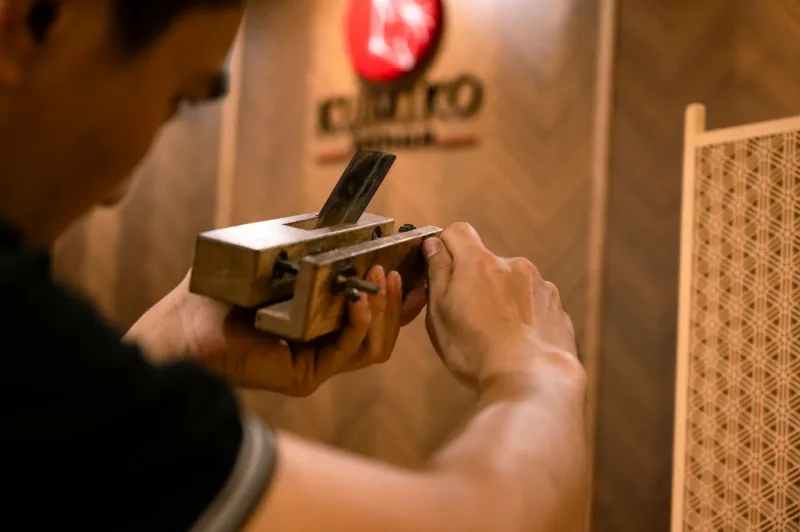
The carpenters entrusted with this work belong to a specialized guild whose techniques date to the Nara period. They use no nails. Joints are cut with a precision that allows timber frames to flex during seismic activity without fracturing—a structural intelligence encoded long before modern engineering formalized such concepts. Apprentices in this tradition typically spend their first several years doing nothing but sharpening tools and studying wood grain, learning to read timber the way a physician reads a patient.
For shrines that do not undergo full reconstruction, ongoing maintenance requires an equally exacting set of skills. The replacement of cypress-bark roofing, known as hiwadabuki, demands craftspeople who can source, cure, and layer sheets of bark with a consistency that will shed rain for decades. In rural prefectures where these specialists are aging out of the workforce, shrine administrators face a genuine crisis—one that has prompted a modest but growing movement to train younger practitioners through government-sponsored programs.
The Painter's Discipline: Red That Must Never Fade
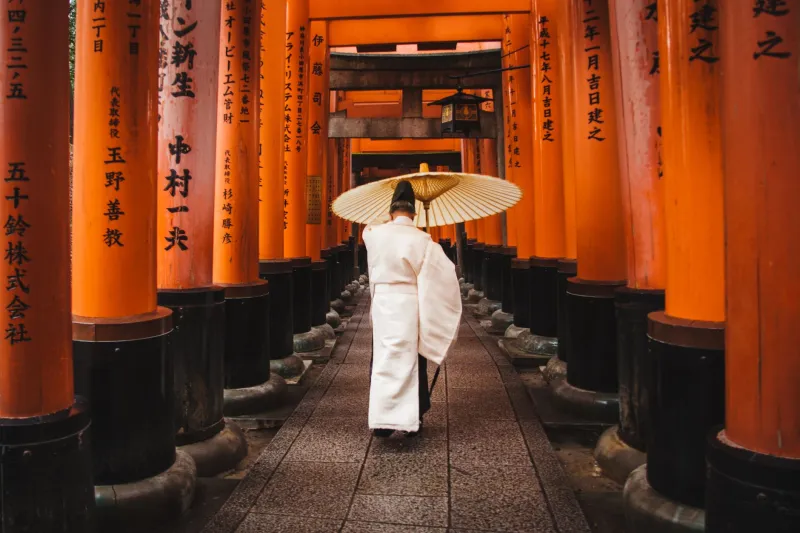
The vivid red lacquer that coats shrine gates and railings is not decorative in the conventional sense. It carries cosmological meaning, serving as a boundary marker between the ordinary world and sacred space. Maintaining that color—its depth, its uniformity, its capacity to signal sanctity even to a first-time visitor—is the responsibility of lacquer specialists who apply their craft with ritualistic deliberateness.
Traditional urushi lacquer, derived from the sap of the Toxicodendron vernicifluum tree, is among the most demanding materials in the craftsperson's repertoire. It must be applied in controlled humidity, cured in darkness, and layered in sequences that can number in the dozens for a single surface. The artisans who work with it often develop skin sensitivities that paradoxically mark them as experienced practitioners—their bodies bearing evidence of long exposure.
Hand-lettered signage presents a separate but related challenge. The wooden boards bearing shrine names, deity designations, and ceremonial inscriptions are composed in classical calligraphic styles that diverge significantly from contemporary Japanese writing conventions. Shrine calligraphers train specifically in these historical forms, understanding that a single misplaced brushstroke on a dedicatory plaque carries consequences that extend beyond aesthetics into the realm of ritual propriety.
Sacred Ground, Maintained by Hand
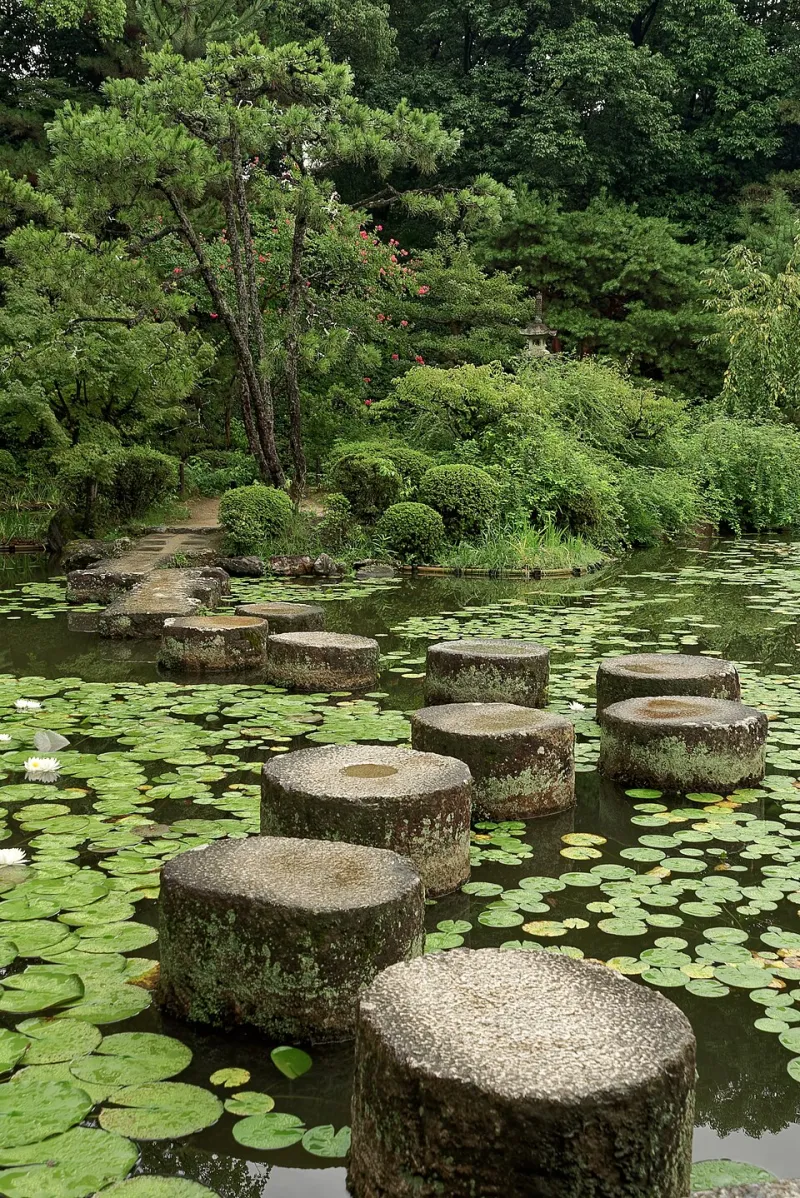
The gravel forecourts of Japanese shrines—the sandō and surrounding precincts—are not merely tidy. They are ritually prepared spaces whose condition reflects the spiritual attentiveness of those who care for them. The raking of gravel into precise patterns, the removal of fallen leaves before morning ceremonies, and the seasonal replanting of sacred flora around shrine boundaries are tasks performed by shamusho staff and shrine priests according to schedules that predate modern landscaping as a profession.
Some shrines cultivate specific tree species considered sacred to the enshrined deity. The camphor trees surrounding Meiji Jingu in Tokyo, for instance, are tended by arborists who understand their symbolic function as much as their horticultural needs. Pruning decisions are made in consultation with head priests, and the removal of a significant tree requires formal ritual acknowledgment.
Rope-making is another craft that intersects directly with sacred function. The massive shimenawa—the twisted straw ropes that demarcate sacred objects and spaces—must be replaced at regular intervals, particularly before major festivals. At shrines like Izumo Taisha in Shimane Prefecture, where the shimenawa above the main hall weighs several tons, this replacement is itself a ceremonial undertaking requiring both physical strength and ritual knowledge.
The Institutional Memory Problem
For American readers accustomed to thinking of cultural preservation in terms of museums and heritage designations, the challenges facing shrine craft traditions may seem abstract. They are, in fact, acutely practical. Japan's declining rural population has reduced the pool of young people available to enter craft apprenticeships in the regions where many historically significant shrines are located. The specialized vocabulary, tools, and embodied knowledge that define these disciplines cannot be uploaded to a database or reconstructed from photographs.
Several organizations are working against this erosion. The Jinja Honcho, Japan's central administrative body for Shinto shrines, has expanded its training programs in recent years to include craft-specific modules. Universities in Kyoto and Nara have introduced coursework in traditional architectural conservation that feeds directly into shrine maintenance contexts. And a small number of shrines have begun inviting international apprentices—a development that would have been unthinkable a generation ago.
What the Visitor Can Observe
For cultural tourists visiting Japan, awareness of these traditions transforms the experience of walking through a shrine precinct. The smoothness of a hand-planed railing, the evenness of a lacquered surface, the calligraphic precision of a name board—these are not incidental details. They are evidence of an ongoing human commitment to the maintenance of sacred space.
If your travel itinerary permits, consider visiting during a period when maintenance work is visible. Early morning hours at larger shrines occasionally reveal groundskeepers at work, and some shrines—particularly those engaged in active reconstruction cycles—display interpretive materials about the crafts involved. A few, including certain shrines in the Ise and Izumo regions, offer structured tours that include craft demonstrations.
The shrines of Japan endure not because stone and timber are indestructible, but because generations of practitioners have chosen, repeatedly and deliberately, to keep them standing. That choice, enacted through callused hands and accumulated skill, is as much a part of Shinto tradition as any formal ceremony conducted within shrine walls.