The Hidden Architecture of Calm: How Shrine Landscapes Are Built to Restore the Human Mind
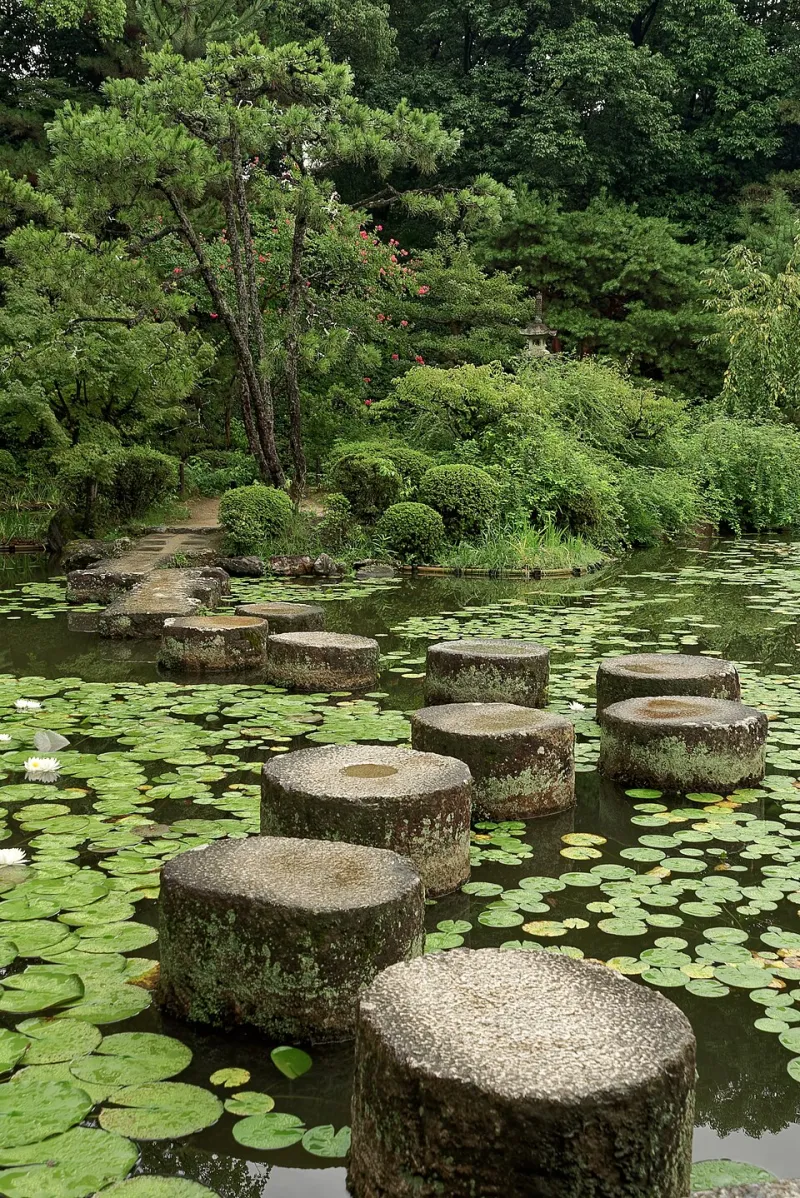
Photo: Jakub Hałun, CC BY 4.0, via Wikimedia Commons
When most American travelers walk through the torii gate of a Japanese shrine, they reach for their cameras. The impulse is understandable—these spaces are visually arresting, layered with textures and colors that seem almost too composed to be real. But what many visitors miss is that this sense of composed beauty is entirely deliberate. Shrine gardens are not decorative afterthoughts. They are precision-built environments, shaped over centuries by a philosophy that treats landscape design as a form of spiritual medicine.
Understanding how these gardens work—and why—can transform a pleasant afternoon into something genuinely restorative.
Landscape as Philosophy: The Roots of Shrine Garden Design
The aesthetic principles governing shrine gardens draw from multiple traditions. Shinto itself, Japan's indigenous spiritual framework, holds that kami—divine spirits—inhabit natural forms: ancient trees, specific rocks, bodies of water, and mountains. This belief directly shapes how sacred grounds are organized. A gnarled, centuries-old camphor tree is not simply a tree; it is a dwelling place, and the space around it is treated accordingly.
Overlaid onto this Shinto foundation are influences from Zen Buddhism, which arrived from China and reached its most refined expression in Japan between the twelfth and sixteenth centuries. Zen garden philosophy introduced the concept of ma—a Japanese term roughly translated as "negative space" or "meaningful emptiness." In practical terms, this means that what is not placed in a garden is as intentional as what is. A single lantern standing alone in a field of raked gravel creates meaning precisely because of the open space surrounding it.
Together, these traditions produced landscapes that engage the mind without overwhelming it—environments calibrated to encourage a particular quality of attention.
The Elements and What They Do
Moss and Ground Cover
Few features of Japanese sacred gardens affect visitors as immediately as moss. At shrines like Saihō-ji in Kyoto—sometimes called the Moss Temple—the ground is blanketed in over 120 varieties of moss, creating a surface that absorbs light rather than reflecting it. Psychologically, this matters. Research into attention restoration theory, developed by environmental psychologists Rachel and Stephen Kaplan, suggests that natural environments featuring what they call "soft fascination"—textures and movements that hold attention gently rather than demanding it—allow the directed-attention networks of the brain to recover from fatigue.
Moss is perhaps the ultimate soft fascination surface. Its fine grain invites close looking without requiring it. American visitors accustomed to the high-contrast, high-stimulation environments of urban life often report feeling an unexpected deceleration when walking across moss-covered shrine grounds—a sensation that is neither boredom nor excitement, but something closer to ease.
Water Features: Sound as Architecture
Water appears in nearly every shrine environment, and its placement is rarely arbitrary. The temizuya, the stone basin where visitors ritually purify their hands before approaching the main hall, is a functional element—but it is also an acoustic one. The sound of moving water has been shown in multiple studies to reduce cortisol levels and lower perceived stress. In shrine design, water is often positioned so that its sound reaches visitors before they see it, initiating a physiological calming response before the conscious mind has registered anything at all.
Beyond the temizuya, many shrine gardens incorporate streams, ponds, or waterfalls positioned along pathways in ways that make silence and sound alternate. This rhythm—quiet, then water, then quiet again—mirrors the interval structures used in meditative breathing practices.
Stone Placement and the Grammar of Stillness
Stones in Japanese sacred landscapes are selected and positioned with a care that can seem excessive until you understand the intent. In the tradition of karesansui (dry landscape gardens), stones represent islands, mountains, or living beings, depending on their orientation and grouping. Even in more naturalistic shrine gardens, stones are rarely placed symmetrically. The asymmetry is purposeful: perfectly balanced arrangements satisfy attention too quickly, while deliberate asymmetry keeps the eye moving in a gentle, exploratory way.
This is the visual equivalent of a sentence that doesn't quite resolve—it keeps you present, looking, rather than allowing the mind to file the scene away and move on.
Tree Canopy and the Quality of Light
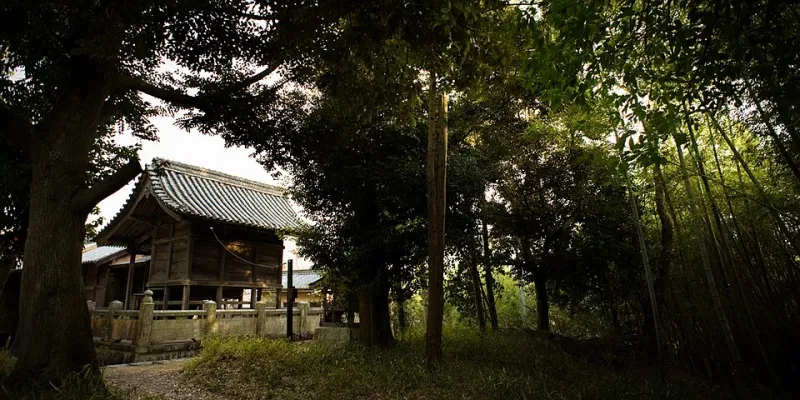
Many of Japan's most significant shrines are set within forested precincts known as chinju no mori—the guardian forest. These groves, often composed of cedar, cypress, and camphor, were historically preserved as sacred space even when surrounding land was cleared for agriculture. Today, they function as what urban planners would call green infrastructure, but their psychological effects go beyond simple shade.
The filtered light beneath a dense shrine canopy produces what the Japanese call komorebi—the dappled interplay of sunlight through leaves. This shifting, unpredictable light pattern appears to engage the brain's visual processing systems in a way that reduces rumination, the repetitive, self-focused thinking associated with anxiety and depression. Walking slowly through a shrine forest and paying specific attention to the light—rather than the path or the destination—is one of the most accessible forms of mindfulness practice available to any visitor.
How to Engage Mindfully: A Practical Approach for US Visitors
Knowing what these gardens are designed to do is only useful if you adjust how you move through them. Here are specific practices worth trying:
Slow your pace by half. The average American tourist moves through a shrine garden at roughly the same speed they walk a city block. Halving that pace—genuinely halving it—changes what you perceive. Details that disappear at normal walking speed become visible.
Leave your itinerary at the gate. Shrine gardens are not organized as linear experiences with a beginning, middle, and end. Resist the urge to move purposefully toward the main hall. Wander. Double back. Sit at the edge of a pond without photographing it.
Use your ears deliberately. Close your eyes for sixty seconds in at least one location within the garden and identify every sound you can hear. This single exercise consistently produces a measurable shift in attentional state and is something any visitor can do without any prior meditation experience.
Notice what is absent. Practice the concept of ma by identifying spaces in the garden that are intentionally empty. Ask yourself what those spaces do for the overall composition—and for your experience of standing within it.
A Different Kind of Souvenir
American travelers spend considerable time and money pursuing wellness—yoga retreats, meditation apps, spa weekends. Japan's shrine gardens offer something these commercial environments often cannot: a form of restorative experience that has been refined over more than a thousand years, embedded in a living cultural tradition, and offered freely to anyone willing to walk through a gate and pay attention.
The garden does the work. Your only obligation is to let it.