Beyond Belief: How Shinto's Concept of Kami Is Quietly Transforming American Spiritual Life
On a hiking trail outside Asheville, North Carolina, a woman named Dana pauses beside an old-growth oak. She does not pray in any conventional sense. She does not recite scripture or perform a formal ritual. Instead, she simply stops, breathes, and acknowledges what she describes as "the presence" in the tree—something she first encountered, and struggled to name, during a visit to Fushimi Inari Taisha in Kyoto three years ago.
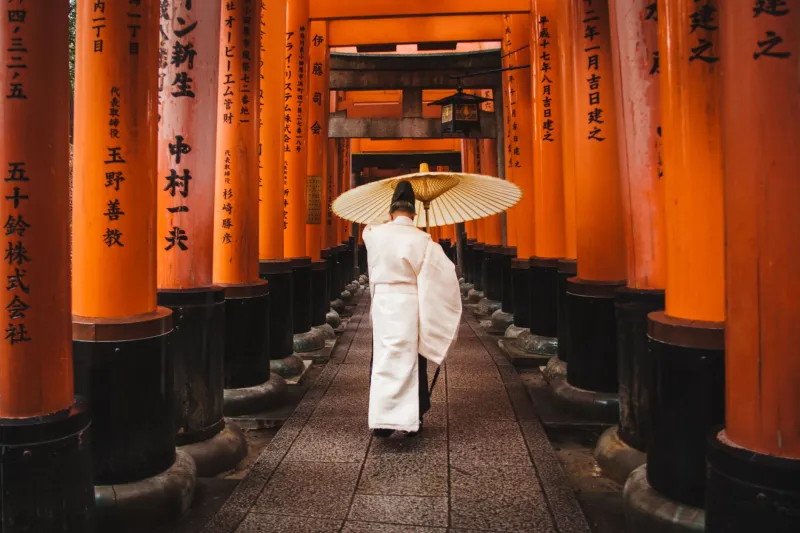
"I had never felt anything like it before," she recalls. "Walking through those thousands of torii gates, surrounded by moss and cedar, I had this overwhelming sense that everything around me was alive in a way that mattered. I didn't have a word for it until a shrine guide mentioned kami."
Dana is not alone. Across the country—from Pacific Northwest forest communities to urban mindfulness circles in New York and Chicago—the Shinto concept of kami is quietly threading itself into American spiritual conversation. Not as doctrine, not as conversion, but as vocabulary for something many people already feel yet struggle to articulate.
What Kami Actually Means
To understand why this concept resonates so deeply with Western seekers, it helps to understand what kami is—and, perhaps more importantly, what it is not.
In Shinto, Japan's indigenous spiritual tradition, kami refers to the sacred essence or divine quality believed to inhabit natural phenomena, places, and even certain objects. Mountains, rivers, ancient trees, storms, and ancestors can all be understood as kami or as possessing kami. The tradition does not demand a singular, omnipotent deity. It does not draw a sharp line between the sacred and the mundane. Instead, it proposes that the world is saturated with spiritual significance, and that human beings flourish when they cultivate an awareness of and reverence for that significance.
Dr. Alyssa Moreno, a religious studies scholar at a university in the Pacific Northwest who has written extensively on Japanese spirituality and its global influence, frames it this way: "Kami is not a god you worship from a distance. It is a quality of presence that exists in relationship. Shinto shrines are literally built to honor that presence in specific places—a waterfall, a boulder, a grove. For Americans who feel spiritually homeless, that framework can feel like a revelation."
The Appeal to the Spiritually Unaffiliated
The timing of kami's quiet American moment is not coincidental. Polling data from the Pew Research Center has consistently shown that the number of religiously unaffiliated Americans—those who identify as atheist, agnostic, or simply "nothing in particular"—has grown substantially over the past two decades. Yet surveys also suggest that many within this group still report a desire for spiritual connection, a sense of transcendence, or a framework for meaning that extends beyond the purely material.
Shinto, particularly as experienced through shrine visits in Japan, offers something that neither secular humanism nor institutional religion quite provides: a structured, aesthetically rich encounter with the idea that the natural world is inherently sacred, without requiring theological commitment.
"There is no conversion in Shinto," notes Dr. Moreno. "You are not asked to believe a set of propositions. You are invited to pay attention—to the water, the stone, the wind through the trees. That is extraordinarily appealing to people who have left organized religion but haven't left the spiritual impulse behind."
For many American visitors, the first encounter with a Shinto shrine functions almost as a permission slip. The act of approaching a shrine, purifying one's hands at the temizuya (water ablution pavilion), and bowing before the main hall is, at its core, an act of deliberate attention. It says: this place matters, this moment matters, something here is worth honoring.
From Shrine Visit to Daily Practice
What is perhaps most striking is how that initial encounter is being translated into ongoing practice back home—often in ways that have no direct Shinto equivalent but carry the same animistic spirit.
Marcus, a landscape architect based in Portland, Oregon, describes how a visit to Izumo Taisha in Shimane Prefecture fundamentally altered his professional philosophy. "I started thinking about every site I work on as having its own kami—its own character, its own story, its own needs. That shift made me a better designer. I listen to the land differently now."
In Minneapolis, a small reading group that formed around a shared interest in Japanese culture has developed what its members call a "kami practice"—a loose, secular ritual of pausing to acknowledge the life in their immediate environment before beginning group discussions. "We're not performing Shinto," one member is careful to say. "We're borrowing an idea that helps us slow down and pay attention. That feels respectful rather than appropriative, I hope."
The question of cultural appropriation is one that scholars and practitioners engage with seriously. Dr. Moreno advises that the distinction lies in approach. "Taking a concept as inspiration for personal reflection is very different from claiming to practice Shinto or performing rituals stripped of their context. The former is cultural exchange. The latter risks becoming disrespectful. The best approach is to engage with the actual tradition—visit shrines, read seriously, listen to Japanese voices—rather than constructing a personal mythology from fragments."
Why the Shrine Itself Matters
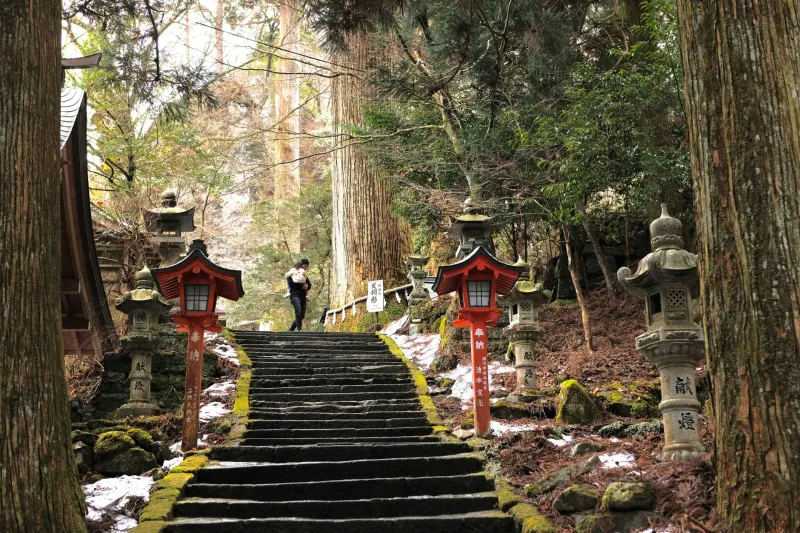
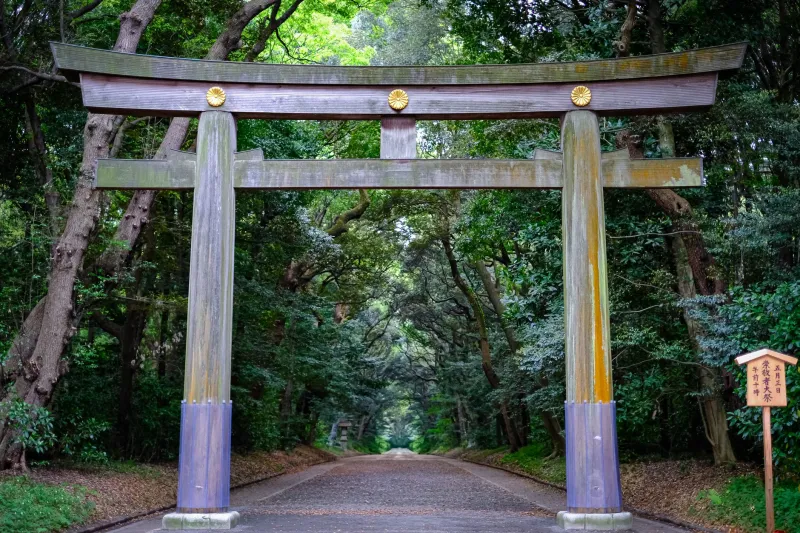
For those who have made the journey to Japan, the physical experience of a Shinto shrine remains central to understanding why kami resonates so powerfully. The architecture of a shrine is not incidental to its meaning—it is the meaning made physical. The forested approach path, or sandō, gradually separates the visitor from ordinary time. The torii gate marks a threshold. The sound of water, the scent of cedar and incense, the sight of ancient stone lanterns half-covered in moss: all of it is designed, over centuries of accumulated wisdom, to cultivate a particular quality of awareness.
"You cannot fully understand kami from a book," says Dr. Moreno. "The shrine is a technology for producing a specific kind of experience. When Americans visit and feel something shift in them, that is the technology working as intended. The question is what they do with that experience when they return home."
The answer, increasingly, is that they carry it—imperfectly, creatively, and with evident sincerity—into the texture of their ordinary lives. Not as a religion borrowed wholesale, but as a reminder that the world is more alive than modern Western culture typically allows.
A Living Conversation
Shinto's influence on American spiritual life is neither a trend to be celebrated uncritically nor a phenomenon to be dismissed. It is, at its most honest, a conversation—between two cultures, between ancient wisdom and contemporary need, between the specific and the universal.
For American travelers planning a visit to Japan's sacred shrines, understanding kami before you arrive can transform the experience from a sightseeing excursion into something genuinely illuminating. And for those who have already stood beneath a towering cryptomeria tree on a shrine's forested grounds and felt something they could not name, perhaps now there is a word.
It has been there for a very long time, waiting quietly in the stone and the water and the wind.