Crossing the Threshold Digitally: How Shinto Priests Are Guiding American Students Toward Sacred Stillness From Afar
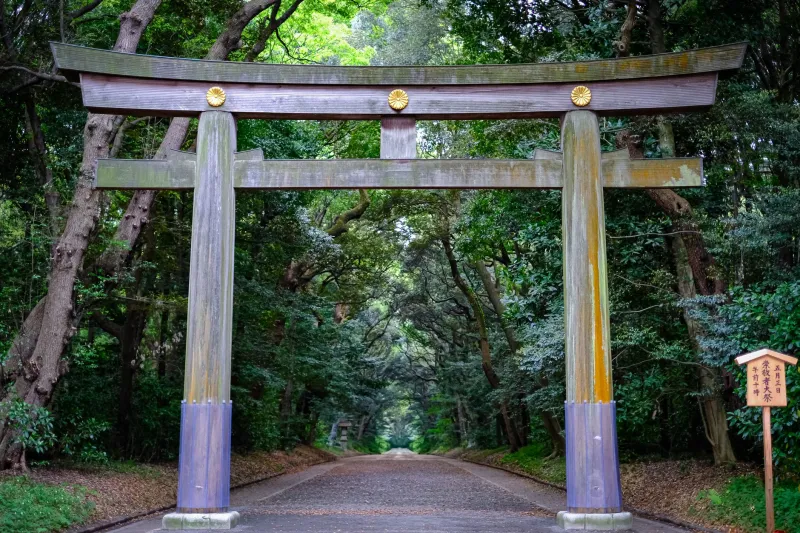
For centuries, the path to spiritual calm within Japan's Shinto tradition has begun at a physical threshold — the towering torii gate that marks the boundary between the ordinary world and sacred ground. Pilgrims have walked gravel paths, listened to wind move through ancient cedar, and stood before weathered wooden shrines to feel something shift within themselves. That journey, rooted in place and presence, would have seemed wholly untransferable to a digital medium just a generation ago.
Yet across the United States today, a growing number of Americans are beginning their own version of that journey — not on a forested hillside in Kyoto or Nara, but seated at kitchen tables in Portland, living rooms in Atlanta, and home offices in Minneapolis, guided by Japanese priests and shrine practitioners through laptop screens.
A Tradition That Travels Carefully
Shinto, Japan's indigenous spiritual tradition, has historically maintained a deeply local character. Unlike missionary religions that actively sought new adherents abroad, Shinto's practices have remained largely tied to specific sacred sites, regional kami (divine spirits), and hereditary priestly lineages. The idea of exporting its contemplative dimension to foreign audiences — let alone through digital platforms — represents a meaningful departure from that insularity.
What has changed, practitioners say, is not the tradition itself but the urgency of the moment. In the years following the global disruptions of the early 2020s, interest in mindfulness, stress reduction, and non-Western spiritual frameworks surged dramatically among American audiences. Japanese shrine practitioners, some of whom had already been hosting international visitors at their shrines before travel restrictions made that impossible, began exploring whether any portion of their work could be offered remotely.
The answer, it turned out, was nuanced.
What Can Be Transmitted Across Distance
Several Japanese priests and shrine-affiliated meditation teachers have developed structured programs specifically for Western students. These typically center on practices that do not require physical sacred space to be meaningful — breath regulation techniques derived from the meditative stillness (seiza) cultivated during shrine rituals, visualization practices connected to natural kami, and guided reflections on the Shinto concept of harae, the purification of mind and spirit.
One recurring element in these remote programs is the practice of misogi, a ritual purification tradition. While its most dramatic form involves standing beneath a cold waterfall at a mountain shrine, its contemplative core — the deliberate release of accumulated spiritual and emotional weight — can be taught and practiced without that physical context. Instructors often guide students through breathwork and intentional stillness as a modern, accessible approximation of the same interior movement.
American students who have participated in these programs describe the experience in terms that will be familiar to anyone who has explored secular mindfulness: a slowing of mental chatter, a heightened attention to sensory detail, and a sense of perspective that outlasts the session itself. What distinguishes the Shinto-informed approach, many report, is its explicit grounding in relationship — with natural forces, with ancestral lineage, and with a world understood to be populated by responsive, living presences.
The Question of What Is Lost
Not everyone within the Shinto world regards this development with enthusiasm. Some senior priests and scholars of Japanese religion have expressed concern that contemplative practices stripped of their original context risk becoming something categorically different — wellness content dressed in the aesthetic language of tradition rather than genuine transmission of a living spiritual inheritance.
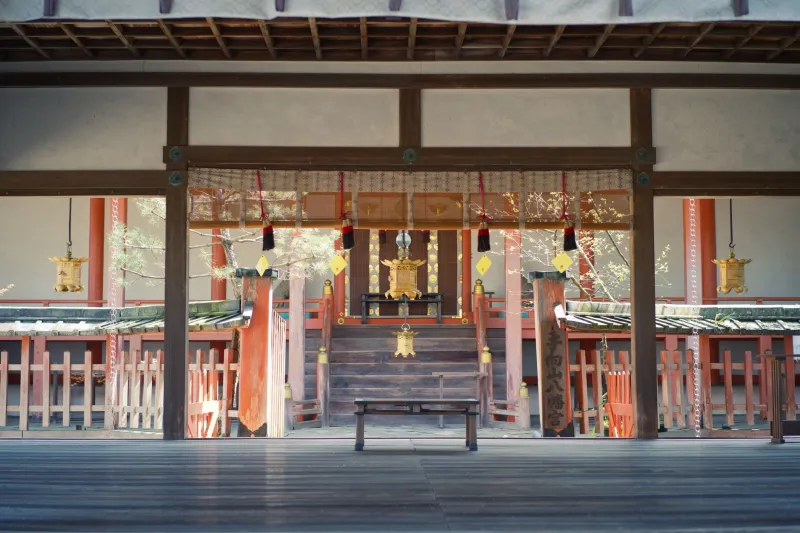
This critique carries real weight. The experience of standing in the forecourt of a great shrine — hearing the distant sound of a ritual drum, smelling cedar resin and incense, watching light filter through a canopy of ancient trees — is not incidental to Shinto's contemplative power. It is constitutive of it. The tradition's understanding of kami is inseparable from specific landscapes, specific stones, specific bodies of water. A guided visualization exercise, however skillfully led, operates in a fundamentally different register.
Priests who do offer remote programs tend to acknowledge this openly. Many frame their digital offerings not as equivalents to shrine experience but as preparatory or supplementary practices — tools that can cultivate receptivity and intention in students who may eventually visit Japan in person, or who simply wish to carry some of the tradition's orientation into their daily lives without making claims of full initiation.
Building Bridges With Integrity
The most thoughtful practitioners working in this space appear to share a common commitment: transparency about what they are offering and what they are not. They resist framing remote sessions as shrine experiences and take care to provide students with genuine cultural and historical context rather than decontextualized technique.
Some have built partnerships with American universities, Japanese cultural organizations, and established meditation centers to ensure their programs are presented within frameworks that honor the tradition's complexity. Others offer accompanying reading materials — histories of specific shrines, explanations of the kami associated with particular practices, and introductions to the ethical framework of Shinto ethics — so that students encounter the contemplative dimension of the tradition as part of a larger, coherent whole.
For American students approaching these offerings, a degree of discernment is warranted. As with any cross-cultural spiritual exchange, the quality of what is available varies considerably. Programs affiliated with recognized shrine institutions, led by credentialed priests, and transparent about the limits of remote transmission deserve a different level of confidence than loosely branded wellness content that borrows Shinto aesthetics without substantive grounding.
The Larger Conversation
What this phenomenon ultimately illuminates is a broader question that Japan's sacred traditions are navigating in real time: how does a place-based, community-rooted spiritual heritage engage a world that is simultaneously more curious about it and more geographically distant from it than at any previous moment in history?
For American travelers who have stood before a shrine torii and felt something they struggled to name, the availability of ongoing guidance from practitioners within that tradition is genuinely significant. It offers a way to sustain and deepen an encounter that might otherwise remain a beautiful but isolated memory.
For the tradition itself, the stakes are higher and the questions more open. Whether digital transmission ultimately serves Shinto's vitality or gradually dilutes it is a question that will be answered not in any single program or platform, but in the cumulative choices made by priests, students, and institutions over the coming decades.
What seems clear, for now, is that the conversation is happening — carefully, imperfectly, and with a seriousness that the subject deserves.